


Gekantete Spiralfedern liefern eine nahezu konstante Kraft über einen großen Einfederungsbereich. Erfahren Sie, wie ihre einzigartige Geometrie, Mechanik und Materialien herkömmliche Federn in anspruchsvollen Anwendungen übertreffen.
In vielen mechanischen und elektromechanischen Systemen ist die Aufrechterhaltung einer stabilen und vorhersehbaren Kraft während der gesamten Bewegung entscheidend. Herkömmliche Druck- oder Zugfedern erzeugen oft eine schnell ansteigende oder abfallende Last, wenn sie sich durchbiegen, was zu unbeständiger Leistung, übermäßigem Verschleiß oder vorzeitigem Ausfall der zugehörigen Komponenten führen kann. Diese Einschränkung hat Ingenieure dazu veranlasst, nach alternativen Federtechnologien zu suchen, die ein gleichmäßigeres, kontrollierteres Kraftverhalten bieten.
Kantige Schraubenfedern haben sich zu einer bevorzugten Lösung für Anwendungen entwickelt, die eine nahezu konstante Kraft über einen großen Verformungsbereich erfordern. Ihre besondere Spulengeometrie verändert grundlegend die Art und Weise, wie die Kraft während der Kompression erzeugt und verteilt wird. Infolgedessen werden schräge Schraubenfedern häufig in elektrischen Steckverbindern, EMI-Abschirmungen, Verriegelungsmechanismen, medizinischen Geräten, Luft- und Raumfahrtbaugruppen und hochzyklischen Industriesystemen eingesetzt.
Dieser Artikel erklärt warum geneigte Schraubenfedern eine konstante Kraft erzeugen, Der Schwerpunkt liegt dabei auf ihrer Geometrie, ihrem mechanischen Verhalten, ihren Materialeigenschaften und ihren Leistungsvorteilen in der Praxis.
Gekantete Schraubenfedern sind Schraubenfedern aus rundem oder geformtem Draht, deren Windungen jedoch im Gegensatz zu herkömmlichen Federn absichtlich in einem Winkel zur Federachse angeordnet sind, d. h. gekantet“ sind.
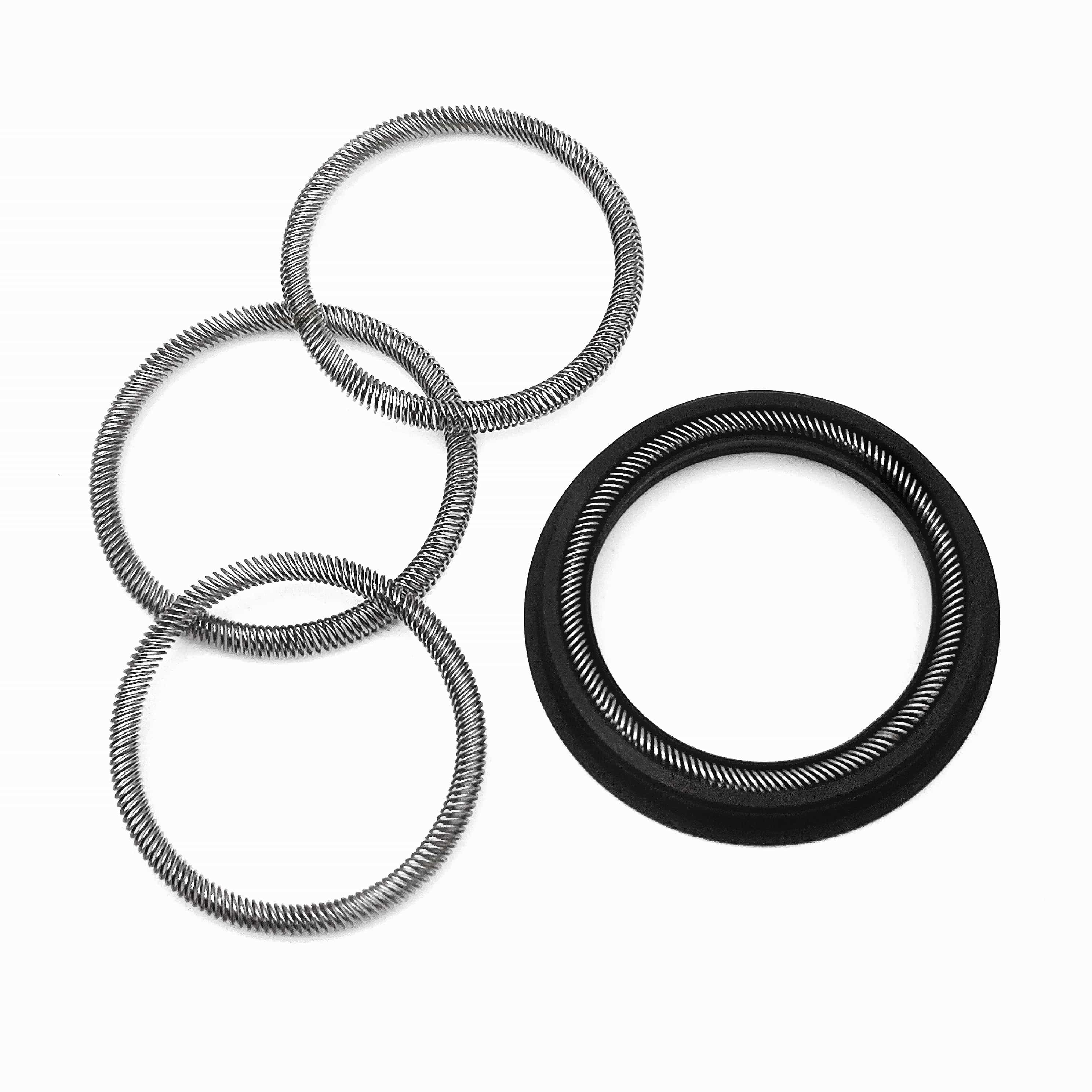
Zu den Hauptmerkmalen von Schraubenfedern mit Schräglage gehören:
Diese einzigartige Struktur ist die Grundlage für das konstante Kraftverhalten, das die Canted-Spiralfedern von herkömmlichen Konstruktionen unterscheidet.
Um zu verstehen, warum sich kantige Schraubenfedern anders verhalten, ist es hilfreich, zunächst zu untersuchen, wie herkömmliche Federn Kraft erzeugen.
In einer Standard-Druckfeder:
Dieses Verhalten ist bei Anwendungen, die eine sanfte Kontaktkraft oder eine konstante elektrische Leitfähigkeit erfordern, oft unerwünscht.
Traditionelle Federn führen oft zu:
Diese Herausforderungen unterstreichen die Notwendigkeit einer Federkonstruktion, die in der Lage ist, die Kraft über die Bewegung hinweg stabil zu halten - ein Bereich, in dem sich geneigte Schraubenfedern auszeichnen.
Das charakteristische Merkmal von Schraubenfedern mit schrägem Verlauf ist ihre Spulenwinkel, was die Reaktion der Feder auf die Kompression grundlegend verändert.
In schrägen Schraubenfedern:
Dieser Rollkontakt verringert die Änderung der effektiven Federrate bei zunehmender Einfederung, so dass die Kraft relativ konstant bleibt.
Im Gegensatz zu Druckfedern, bei denen die Windungen axial zusammengedrückt werden, treten bei kantigen Schraubenfedern eine Kombination aus:
Diese Multi-Mode-Verformung absorbiert die Durchbiegung ohne einen steilen Anstieg der Last.
Das Verhalten der konstanten Kraft von kantigen Schraubenfedern lässt sich durch mehrere zusammenwirkende mechanische Prinzipien erklären.
Wenn die Feder zusammengedrückt wird:
Dadurch wird ein plötzlicher Anstieg der Steifigkeit verhindert.
Die abgewinkelte Geometrie führt zu einer kontrollierten Reibung zwischen benachbarten Spulen. Diese Reibung:
Während übermäßige Reibung bei vielen Konstruktionen unerwünscht ist, ist die kontrollierte Reibung bei kantigen Schraubenfedern ein funktioneller Vorteil.
Denn die Last wird über die Länge der Spule verteilt:
Dies trägt zu einer stabilen Kraftabgabe während der gesamten Lebensdauer der Feder bei.
In der nachstehenden Tabelle werden typische Kraft-Weg-Kennlinien verglichen:
| Feder Typ | Kraftänderung über Auslenkung | Laststabilität |
|---|---|---|
| Druckfeder | Schneller, linearer Anstieg | Niedrig |
| Zugfeder | Schneller Anstieg nach Vorbelastung | Niedrig |
| Canted Coil Feder | Minimale Veränderung über einen weiten Bereich | Hoch |
Dieser Vergleich erklärt, warum schräge Schraubenfedern häufig für Präzisionsanwendungen gewählt werden.
Eine der wertvollsten Eigenschaften von Schraubenfedern ist ihre Fähigkeit, über einen großen Einfederungsbereich ohne Funktionsverlust zu arbeiten.
Die große Ablenkungsfähigkeit ermöglicht:
Gekantete Schraubenfedern sorgen für eine gleichbleibende Kraft, auch wenn sich die Abmessungen des Systems ändern.
Gekantete Spiralfedern sind für Anwendungen mit hohen Zyklen ausgelegt, die oft Hunderttausende oder sogar Millionen von Zyklen ohne nennenswerten Kraftabbau überschreiten.
Das macht sie ideal für:
Während die Geometrie das primäre Verhalten bestimmt, spielt die Materialauswahl eine unterstützende Rolle für die Kraftstabilität.
| Material | Hauptvorteil | Typische Anwendungen |
|---|---|---|
| Rostfreier Stahl | Korrosionsbeständigkeit | Industriell, medizinisch |
| Beryllium-Kupfer | Elektrische Leitfähigkeit | Elektrische Kontakte |
| Elgiloy / MP35N | Hohe Ermüdungsfestigkeit | Luft- und Raumfahrt |
| Inconel / Hastelloy | High-temperature stability | Semiconductor equipment |
The right material ensures that canted coil springs maintain consistent force under environmental stress.
Achieving constant force is not only a design challenge but also a manufacturing one.
Critical manufacturing factors include:
High-precision CNC coiling equipment is typically required to produce reliable canted coil springs.
The constant-force behavior of canted coil springs enables performance improvements across many industries.
In EMI shielding applications:
Canted coil springs are often preferred over fingerstock for this reason.
For latching and locking systems:
Another reason canted coil springs provide superior force control is their design flexibility.
Engineers can fine-tune:
This flexibility allows canted coil springs to be optimized for specific force targets without compromising deflection capability.
The ability of canted coil springs to provide constant force over a wide deflection range is the result of:
Together, these factors create a spring that behaves predictably, resists fatigue, and adapts to real-world conditions.
For applications where force stability is critical, schräge Schraubenfedern offer a clear advantage over traditional spring designs. Their unique geometry enables near-constant load across wide deflection ranges, reducing sensitivity to tolerances, wear, and environmental changes.
Whether used in electrical connectors, EMI shielding systems, or mechanical retention assemblies, canted coil springs improve reliability, extend service life, and enhance overall system performance. As engineering demands continue to increase, canted coil springs remain a proven solution for delivering consistent force where it matters most.
For more info.,please email to : sale01@handaspring.com