Canted Coil Spring vs Compression Spring: A Complete Engineering Comparison

Canted coil spring vs compression spring comparison covering structure, load behavior, fatigue life, EMI shielding performance, and applications to help engineers select the right spring solution.

Introduction: Understanding Canted Coil Spring vs Compression Spring

Canted Coil Spring vs Compression Spring

When selecting a spring for precision mechanical or electrical applications, engineers frequently compare canted coil spring vs compression spring designs. Although both spring types serve to store mechanical energy and provide force, the canted coil spring offers fundamentally different performance characteristics compared to a traditional compression spring.

A コイルスプリング is specifically engineered to deliver consistent force, long fatigue life, and excellent electrical conductivity. In contrast, compression springs are widely used for general mechanical purposes but are limited in high-cycle and high-reliability environments. Understanding the difference between a コイルスプリング and a compression spring is essential for achieving optimal system performance.


What Is a Canted Coil Spring?

コイルスプリング

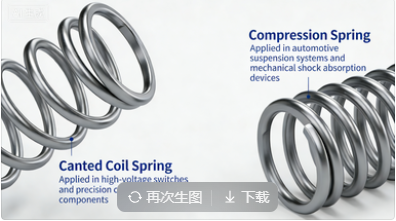
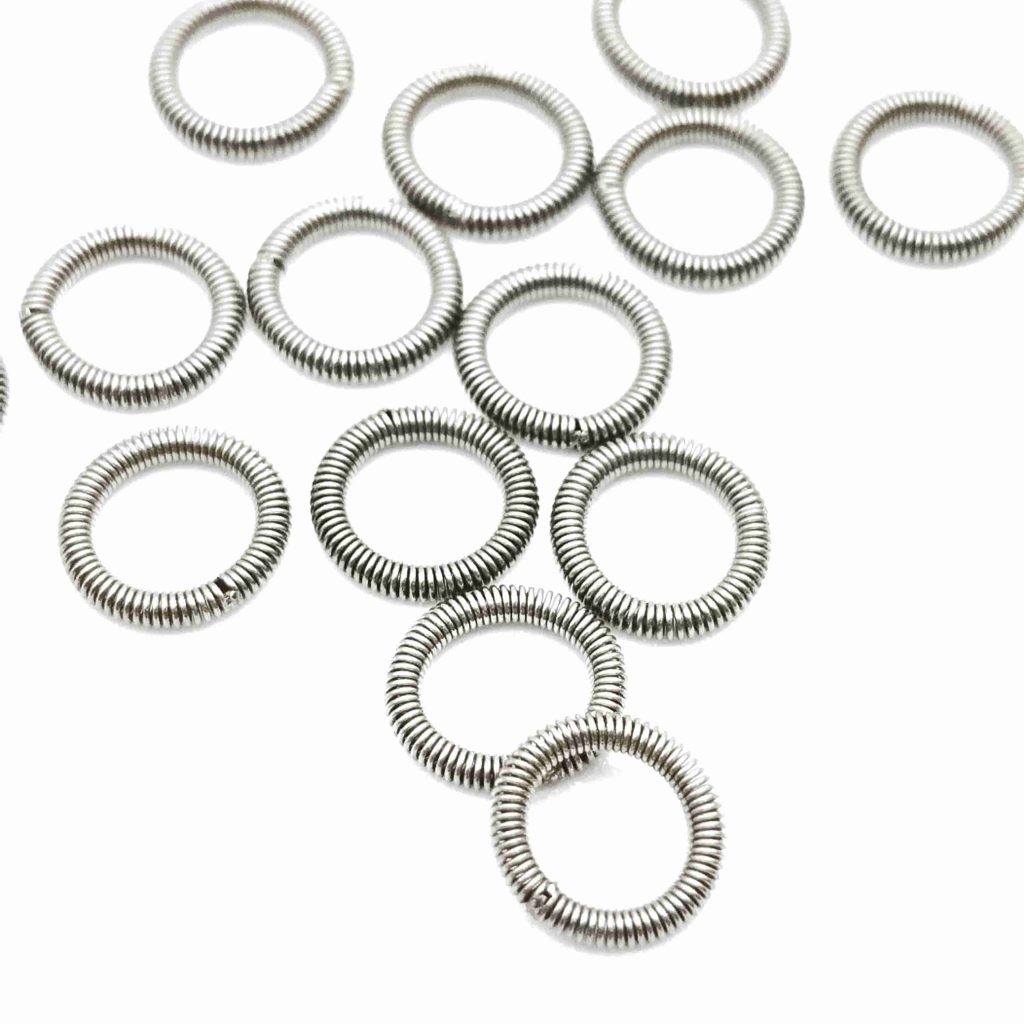
A コイルスプリング is a precision spring made from a continuous wire formed into coils that are intentionally angled relative to the spring axis. This angled geometry allows each coil of the コイルスプリング to act independently during compression.

Structural Design of a Canted Coil Spring

The unique structure of a コイルスプリング provides several mechanical advantages:

  • Angled coils reduce stress concentration
  • Independent coil deflection improves load stability
  • Minimal coil-to-coil contact reduces friction

Because of this design, a コイルスプリング can maintain a near-constant force over a wide working deflection range.

Performance Characteristics of a Canted Coil Spring

A properly designed コイルスプリング offers:

  • Consistent load output
  • Extremely long fatigue life
  • Low insertion and extraction force
  • Excellent vibration resistance

These features make the コイルスプリング ideal for precision and high-reliability applications.


What Is a Compression Spring?

Compression Spring

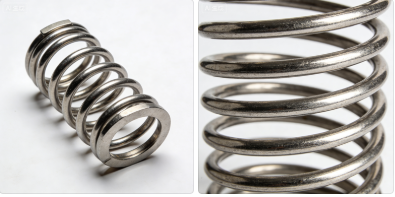
A compression spring is a conventional mechanical spring designed to resist axial compression. Unlike a コイルスプリング, a compression spring relies on parallel coils that stack against each other under load.

Compression Spring Structure vs Canted Coil Spring

While a コイルスプリング distributes stress evenly across angled coils, a compression spring experiences increasing stress as coils come into contact. This structural difference explains why a コイルスプリング performs better in high-cycle applications.


Canted Coil Spring vs Compression Spring – Structural Comparison

特徴傾斜コイルスプリングCompression Spring
コイル形状AngledParallel
Stress DistributionEvenConcentrated
Coil InteractionIndependentCoil stacking
FrictionLowHigh

The structural advantages of a コイルスプリング directly result in superior mechanical and electrical performance.


Load Behavior – Why Canted Coil Spring Performs Better

Near-Constant Load of a Canted Coil Spring

One of the most important benefits of a コイルスプリング is its ability to maintain consistent force throughout compression. This makes the コイルスプリング ideal for applications requiring stable contact pressure.

Variable Load in Compression Springs

Compression springs exhibit increasing force as deflection increases. In contrast, a コイルスプリング avoids excessive load buildup, protecting mating components and extending system life.


Fatigue Life Comparison

Long Fatigue Life of Canted Coil Spring

Because each coil in a コイルスプリング deflects independently, fatigue stress is significantly reduced. A コイルスプリング can withstand millions of cycles without significant performance degradation.

Fatigue Limitations of Compression Springs

Compression springs experience coil friction and permanent deformation under repeated loads. In applications where long life is critical, a コイルスプリング is a far more reliable solution.


EMI Shielding Performance of Canted Coil Spring

Why Canted Coil Spring Is Ideal for EMI Shielding

A コイルスプリング provides continuous conductive contact and uniform pressure, which is essential for effective EMI shielding. For this reason, the コイルスプリング is widely used in RF enclosures, connectors, and electronic housings.

Compression Spring Limitations in EMI Applications

Compression springs lack consistent electrical contact and are not designed for EMI shielding. In contrast, a コイルスプリング maintains electrical continuity even under vibration.


Installation Advantages of Canted Coil Spring

A コイルスプリング can be installed in various groove designs, including rectangular, dovetail, and circular grooves. This flexibility allows the コイルスプリング to accommodate misalignment and surface irregularities better than compression springs.


Typical Applications of Canted Coil Spring

Common applications for a コイルスプリング を含む:

  • EMI and RFI shielding
  • Electrical connectors
  • Aerospace and defense systems
  • Semiconductor manufacturing equipment
  • Medical devices

In each case, the コイルスプリング outperforms traditional compression springs in reliability and service life.


Cost Consideration – Long-Term Value of Canted Coil Spring

Although a コイルスプリング has a higher initial cost, its long service life and reduced maintenance make it a cost-effective solution over time. For high-reliability systems, a コイルスプリング offers superior total cost of ownership.


Product Description – Canted Coil Spring

High-Performance Canted Coil Spring Solution

Our コイルスプリング products are engineered for applications where consistent force, durability, and electrical conductivity are essential.

Key Features of Our Canted Coil Spring:

  • Stable load across wide deflection
  • Custom sizes and wire diameters
  • Multiple material options
  • Proven EMI shielding performance

Each コイルスプリング is manufactured to strict quality standards to ensure repeatable and reliable performance.


Conclusion: Why Choose Canted Coil Spring Over Compression Spring

The comparison of canted coil spring vs compression spring clearly demonstrates that a コイルスプリング delivers superior performance in load consistency, fatigue life, and EMI shielding capability. For engineers designing critical systems, selecting a コイルスプリング ensures long-term reliability and optimal performance.

FOR MORE INFO.,PLEASE EMAIL TO : sale01@handaspring.com