


Avoid costly performance failures by understanding the most common groove design mistakes for canted coil springs. Learn expert design tips, tolerance guidelines, and proven solutions to improve sealing force, durability, and reliability.
Canted coil springs are widely used in high-performance sealing and electrical contact applications due to their unique geometry and consistent force output. However, even the highest-quality spring can fail if the groove design is incorrect. In fact, improper groove dimensions are one of the leading causes of premature wear, force loss, extrusion, and sealing failure.
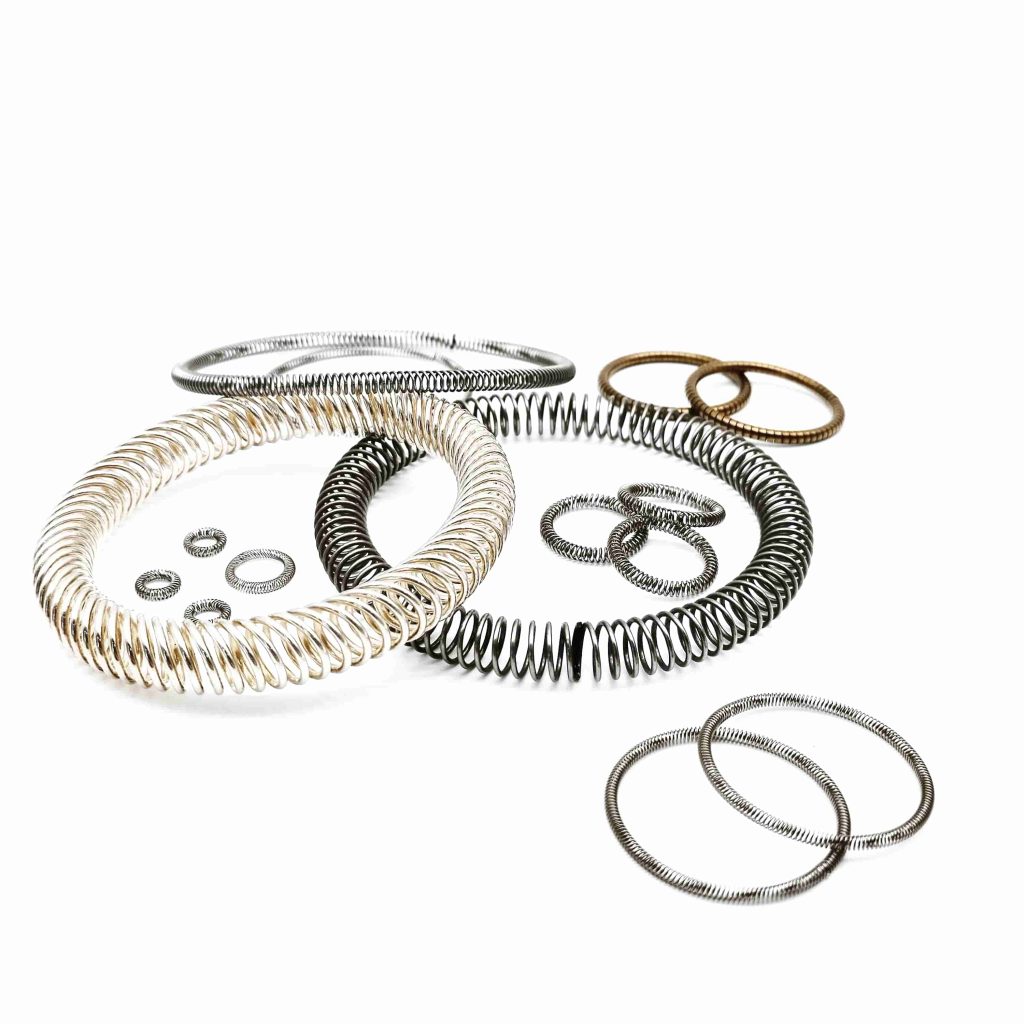
Engineers often focus heavily on spring selection but underestimate the importance of groove geometry. The groove acts as the spring’s operating environment — and small errors can create major performance problems.
This guide explores the most common groove design mistakes for canted coil springs and provides practical solutions to help engineers avoid costly redesigns and field failures.
In sealing and contact systems, the groove is the machined cavity that houses the canted coil spring or spring-energized seal. Its primary functions include:
A properly designed groove ensures the spring operates within its optimal load-deflection range.
Incorrect groove design can lead to:
Because canted coil springs operate within precise deflection windows, even small dimensional errors can push the spring outside its working range.
The mistake:
Designing the groove too deep or too shallow.
Why it happens:
Engineers sometimes use generic seal groove dimensions instead of spring-specific values.
Consequences:
Best practice:
Design groove depth to achieve the manufacturer’s recommended compression (typically 15–30% of free height, depending on series).
The mistake:
Using a groove width that is either too tight or too loose.
Consequences:
Too narrow:
Too wide:
Best practice:
Allow adequate side clearance while maintaining lateral control of the spring.
The mistake:
Designing the groove based only on nominal dimensions.
Why it’s dangerous:
Tolerance stack-up can significantly change actual compression.
Example:
| Parameter | Nominal | Worst Case |
|---|---|---|
| Groove depth | 2.00 mm | 2.08 mm |
| Spring height | 2.20 mm | 2.12 mm |
| Actual compression | 0.20 mm | 0.04 mm |
Result: Contact force drops dramatically.
Best practice:
The mistake:
Leaving sharp internal corners in the groove.
Problems caused:
Best practice:
Use proper corner radii consistent with seal jacket thickness and spring geometry.
The mistake:
Rough machining marks inside the groove.
Why it matters:
Canted coil springs often operate with dynamic motion. Rough surfaces can:
Recommended surface finish:
The mistake:
Failing to include pressure relief or vent paths.
What happens:
This is especially critical in high-pressure hydraulic systems.
Best practice:
The mistake:
Overfilling or underfilling the groove.
Understanding groove fill:
Groove fill = (spring cross-sectional area ÷ groove area)
Typical recommended range: 70–85%
If fill is too high:
If fill is too low:
The mistake:
Designing the groove at room temperature only.
In high-temperature environments:
Common failure modes:
Best practice:
Always evaluate:
The mistake:
Assuming perfect concentricity.
Real-world issue:
Manufacturing tolerances often introduce eccentricity.
Effects on the spring:
Best practice:
The mistake:
Applying O-ring groove standards to canted coil springs.
Why this fails:
Canted coil springs have:
Result:
Best practice:
Always use spring-specific groove guidelines from the manufacturer.
Before finalizing your design, verify:
At HANDA, field failure analysis shows that over 60% of canted coil spring issues originate from groove design errors — not the spring itself.
Our recommendations:
HANDA’s engineering team provides customized groove design support to ensure optimal spring performance in demanding applications such as aerospace, semiconductor, oil & gas, and medical devices.
Canted coil springs are precision components that depend heavily on proper groove design. Even small dimensional errors can lead to force loss, fatigue, extrusion, or sealing failure.
By avoiding the common groove design mistakes outlined in this guide — and by performing thorough tolerance and thermal analysis — engineers can dramatically improve reliability and service life.
When in doubt, collaborate closely with experienced spring manufacturers like HANDA to validate your groove geometry before production. The cost of early design validation is far lower than the cost of field failure.
Need help optimizing your groove design?
HANDA engineering support can review your drawings and recommend the ideal groove dimensions for your specific canted coil spring application.