


Discover the high-temperature performance limits of canted coil springs, including material constraints, stress relaxation, and design considerations. Learn how engineers optimize spring performance in extreme heat environments such as aerospace, oil & gas, and semiconductor equipment.
Canted coil springs are widely used in demanding engineering applications due to their unique ability to provide consistent contact force, excellent electrical conductivity, and reliable sealing performance. These springs are commonly found in EMI shielding systems, spring-energized seals, connectors, and high-precision mechanical assemblies.
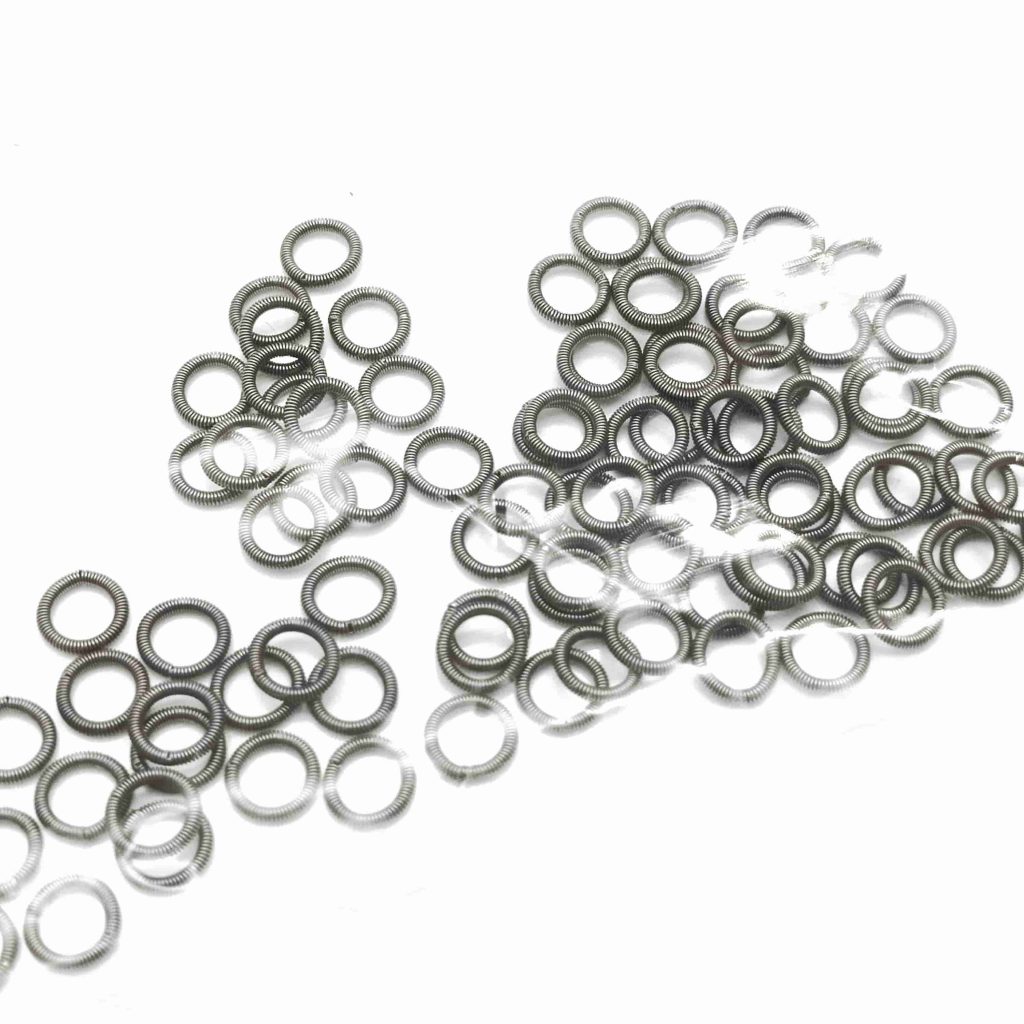
However, when operating in high-temperature environments, the performance of canted coil springs can change significantly. Excessive heat can affect the mechanical strength, elasticity, contact force, and long-term reliability of the spring. Understanding these temperature limitations is essential for engineers designing components used in aerospace, semiconductor manufacturing, oil and gas, and power generation systems.
This article explores the high-temperature limits of canted coil springs, the key factors influencing performance, and practical design strategies to maintain reliable operation under extreme thermal conditions.
A canted coil spring is a helical spring with coils angled relative to the spring axis, allowing it to deliver nearly constant force over a wide deflection range. This unique geometry enables several advantages:
These properties make canted coil springs ideal for EMI shielding, electrical contacts, latching mechanisms, and sealing systems.
However, temperature plays a critical role in determining how well these springs maintain their performance over time.
When exposed to elevated temperatures, metallic materials undergo several changes that influence spring behavior. The most important mechanisms include:
Stress relaxation occurs when a spring held under constant deflection gradually loses force due to material creep at high temperature. This leads to reduced contact pressure.
At elevated temperatures, metals lose yield strength. As the spring material softens, it becomes easier for permanent deformation to occur.
High temperatures accelerate oxidation reactions, particularly in environments containing oxygen, chemicals, or moisture.
Differential expansion between the spring and surrounding components may alter the designed compression level.
Material selection is the most critical factor determining the high-temperature capability of a canted coil spring.
| Material | Maximum Recommended Temperature | Key Advantages | Typical Applications |
|---|---|---|---|
| Stainless Steel 302/316 | 250–300°C | Good corrosion resistance, cost effective | General industrial applications |
| Beryllium Copper | 200–250°C | Excellent conductivity, good fatigue resistance | Electrical contacts, EMI shielding |
| Elgiloy® | 450–500°C | Outstanding fatigue and corrosion resistance | Aerospace, medical equipment |
| MP35N® | 400–450°C | High strength and corrosion resistance | Oil & gas, marine environments |
| Inconel® X-750 | 650–700°C | Exceptional high-temperature strength | Aerospace and turbine systems |
| Hastelloy® | 500–700°C | Superior chemical resistance | Chemical processing |
These temperature limits represent typical long-term operating conditions, not short-term exposure limits.
When temperature exceeds the material capability, several failure modes may appear.
One of the most common issues is force relaxation, where the spring gradually loses its designed load.
| Temperature Range | Typical Effect on Spring |
|---|---|
| <200°C | Minimal performance change |
| 200–350°C | Gradual stress relaxation |
| 350–500°C | Significant force reduction |
| >500°C | Rapid mechanical degradation |
This can lead to:
If the material yield strength decreases significantly at high temperature, the spring may plastically deform, preventing it from returning to its original shape.
Signs include:
At very high temperatures, oxidation may cause:
Protective coatings or high-temperature alloys are often used to mitigate this issue.
Engineers can significantly extend the performance limits of canted coil springs through careful design.
The most effective solution is choosing materials specifically designed for extreme environments.
Recommended alloys include:
These materials maintain mechanical strength and resist oxidation at elevated temperatures.
Spring design parameters directly influence high-temperature reliability.
Important design factors include:
| Design Parameter | High-Temperature Impact |
|---|---|
| Coil angle | Affects load distribution |
| Wire diameter | Influences stress levels |
| Spring height | Determines deflection range |
| Compression ratio | Controls long-term stress |
Reducing the operating stress level can significantly delay stress relaxation.
Surface coatings can improve temperature resistance and conductivity.
Common plating options include:
For example:
In sealing or shielding applications, improper groove design can amplify thermal stresses.
Key considerations include:
A well-designed groove prevents excessive deformation as temperatures fluctuate.
High-temperature spring performance is particularly critical in several industries.
Aircraft engines, satellites, and avionics require components capable of operating in extreme temperature cycles.
Applications include:
Semiconductor equipment often operates in vacuum chambers with elevated temperatures.
Canted coil springs are used in:
Downhole tools may experience temperatures exceeding 300°C combined with high pressure and corrosive environments.
Spring applications include:
Gas turbines and energy systems require materials that maintain elasticity under continuous heat exposure.
Engineers often evaluate spring durability using accelerated thermal testing.
Typical testing methods include:
| Test Method | Purpose |
|---|---|
| Stress relaxation testing | Measures force loss over time |
| Thermal cycling | Simulates temperature fluctuations |
| Oxidation testing | Evaluates surface degradation |
| Fatigue testing | Determines cycle life at high temperature |
These tests help engineers determine whether a spring design will maintain performance during long-term operation.
To ensure reliable performance, engineers should follow these guidelines:
By combining proper material selection with optimized spring geometry, canted coil springs can perform reliably even in extreme thermal environments.
Canted coil springs are highly versatile components used in many demanding industries. However, their performance can be significantly affected by high-temperature environments, particularly through stress relaxation, material softening, and oxidation.
Understanding the temperature limits of different spring materials, along with careful design and testing, allows engineers to extend the operational life of these critical components. By selecting appropriate alloys such as Elgiloy, MP35N, or Inconel, and optimizing spring geometry, it is possible to maintain consistent contact force even under extreme thermal conditions.
As industries continue pushing equipment to higher temperatures and more demanding environments, properly engineered canted coil springs will remain essential for reliable electrical contact, sealing performance, and mechanical stability.