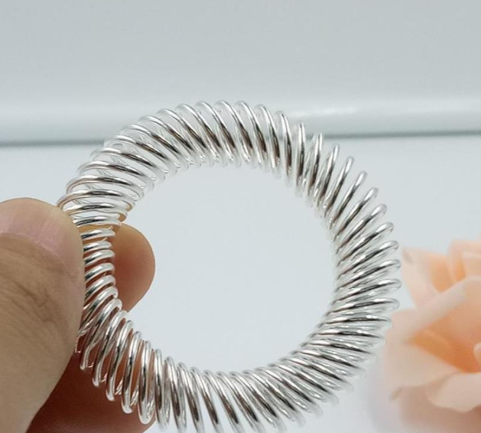
Discover the complete canted coil spring design checklist for engineers. Learn how to optimize spring force, material selection, groove design, EMI shielding, and sealing performance for high-reliability applications.
Canted coil springs are widely used in demanding industries such as aerospace, medical devices, semiconductor manufacturing, oil & gas, and high-performance electronics. Their unique angled-coil structure provides nearly constant spring force, low insertion force, reliable conductivity, and long cycle life.
However, designing a successful canted coil spring system requires more than selecting a standard spring size. Engineers must carefully evaluate factors such as operating environment, load-deflection characteristics, groove geometry, electrical requirements, and long-term reliability.
This article provides a practical canted coil spring design checklist to help engineers reduce design risks, improve product performance, and avoid costly failures.
What Is a Canted Coil Spring?
A canted coil spring is a special helical spring made from coils positioned at an angle relative to the spring axis. Unlike traditional compression springs, canted coil springs offer:
Low and predictable spring force
Wide working deflection range
Excellent fatigue resistance
Stable electrical conductivity
Reliable sealing support
Long operational lifespan
These springs are commonly used in:
Spring-energized seals
EMI/RFI shielding
Electrical connectors
Battery contacts
Semiconductor systems
Aerospace sealing assemblies
Why a Design Checklist Matters
Improper spring design can result in:
Design Problem
Potential Failure
Incorrect force selection
Seal leakage or wear
Poor material choice
Corrosion or fatigue
Improper groove dimensions
Spring deformation
Electrical mismatch
High contact resistance
Inadequate testing
Premature product failure
Using a structured engineering checklist helps improve consistency, reliability, and manufacturing efficiency.
1. Define the Application Requirements
Before selecting a spring, engineers should clearly define the operating conditions.
Key Questions
Is the application static or dynamic?
Is the spring used for sealing, conductivity, or shielding?
What is the required lifespan?
What are the operating temperatures?
Will the system face vibration or shock?
Is the environment corrosive or vacuum-based?
Understanding these conditions helps narrow down the proper spring configuration.
2. Determine Required Spring Force
Spring force is one of the most critical design parameters.
Choosing excessive force may cause:
Increased friction
Excessive wear
Seal damage
Difficult assembly
Insufficient force may result in:
Leakage
Electrical instability
Poor EMI shielding
Recommended Design Goal
Select the lowest spring force capable of maintaining reliable performance.
3. Evaluate Load-Deflection Characteristics
Canted coil springs provide nearly constant force over a wide deflection range.
Engineers should analyze:
Parameter
Importance
Initial insertion force
Assembly performance
Working deflection
Operational reliability
Maximum compression
Prevent overloading
Recovery characteristics
Long-term durability
Always review manufacturer load-deflection curves before finalizing the design.
4. Select the Proper Spring Material
Material selection directly affects corrosion resistance, fatigue life, conductivity, and temperature capability.
Common Materials
Material
Typical Use
Stainless Steel 302
General industrial applications
Stainless Steel 316
Corrosion-resistant environments
Elgiloy®
Medical and marine applications
MP35N®
Aerospace and high-strength systems
Inconel®
High-temperature environments
Beryllium Copper
High electrical conductivity
Material Selection Considerations
Corrosion resistance
Temperature range
Fatigue resistance
Electrical conductivity
Chemical compatibility
5. Optimize Groove Design
Proper groove design is essential for spring performance.
Incorrect groove geometry can cause:
Uneven loading
Over-compression
Spring displacement
Reduced sealing performance
Groove Design Checklist
Proper groove depth
Controlled groove width
Smooth edge finishing
Accurate tolerance control
Correct spring retention
Manufacturers often provide recommended groove specifications for optimal performance.
6. Consider Environmental Conditions
Environmental factors significantly affect spring reliability.
Critical Environmental Factors
High temperature
Cryogenic temperature
Chemical exposure
Salt spray
Humidity
Vacuum conditions
Radiation exposure
For example:
High temperatures may cause stress relaxation
Vacuum systems require low outgassing materials
Cryogenic systems require materials with stable elasticity
Environmental analysis should always be completed during early-stage design.
7. Review Electrical Performance Requirements
For conductive applications, engineers must evaluate electrical performance carefully.
Important Electrical Factors
Contact resistance
Conductivity
Current carrying capacity
Surface plating
Oxidation resistance
Common Plating Options
Plating
Benefits
Gold
Excellent corrosion resistance
Silver
High conductivity
Nickel
Wear resistance
Tin
Cost-effective conductivity
Electrical contact reliability is especially critical in aerospace, medical, and battery systems.
8. Verify EMI Shielding Performance
In EMI/RFI shielding applications, spring geometry and conductivity must work together.
EMI Design Considerations
Compression consistency
Contact density
Shield continuity
Material conductivity
Surface plating
Poor shielding design may lead to electromagnetic leakage and signal interference.
9. Evaluate Fatigue Life and Durability
Canted coil springs are often used in applications involving repeated cycling.
Fatigue Design Factors
Compression cycles
Operating frequency
Deflection range
Material fatigue resistance
Environmental stress
Engineers should estimate expected service life and validate it through testing.
10. Validate Assembly and Installation
Assembly issues are frequently overlooked during design.
Common Assembly Problems
Excessive insertion force
Spring twisting
Misalignment
Groove interference
Difficult maintenance
Prototype testing helps identify installation problems before mass production.
11. Perform Real-World Testing
Laboratory calculations alone are not sufficient for critical applications.
Recommended Tests
Test
Purpose
Compression cycle testing
Fatigue evaluation
Salt spray testing
Corrosion resistance
Thermal cycling
Temperature durability
Contact resistance testing
Electrical stability
Vacuum testing
Low outgassing validation
Testing under actual operating conditions greatly improves long-term reliability.
12. Work with an Experienced Manufacturer
An experienced spring manufacturer can help optimize:
Spring geometry
Material selection
Groove dimensions
Plating options
Force characteristics
Manufacturing tolerances
Engineering support during early-stage development often reduces redesign costs and accelerates product qualification.
HANDA Canted Coil Spring Engineering Solutions
HANDA provides precision-engineered canted coil spring solutions for high-reliability industries worldwide.
HANDA Advantages
Custom spring design
High-precision manufacturing
Multiple alloy options
Custom plating solutions
Engineering support
Fast prototype development
Strict quality control
Typical Applications
Aerospace systems
Semiconductor equipment
Medical devices
Oil & gas systems
EMI shielding
Electrical connectors
Battery contact systems
HANDA supports both standard and custom spring requirements for complex engineering applications.
Final Engineering Design Checklist
Before finalizing your canted coil spring design, confirm the following:
✅ Application requirements defined ✅ Spring force verified ✅ Load-deflection curve reviewed ✅ Material compatibility confirmed ✅ Groove dimensions optimized ✅ Environmental conditions evaluated ✅ Electrical requirements validated ✅ EMI shielding performance checked ✅ Fatigue life estimated ✅ Assembly testing completed ✅ Real-world validation performed
Conclusion
Designing a reliable canted coil spring system requires careful attention to mechanical, electrical, environmental, and manufacturing factors. A structured engineering checklist helps reduce design errors, improve product reliability, and extend operational life.
By evaluating spring force, materials, groove geometry, environmental exposure, and testing requirements early in the design process, engineers can avoid costly failures and achieve optimal performance in demanding applications.
Partnering with an experienced manufacturer like HANDA further ensures consistent quality, engineering support, and long-term reliability for critical systems.
Canted Coil Spring Design Checklist for Engineers - Handa Spring
Home
News
Canted Coil Spring Design Checklist for Engineers
Hunan Handa Electronic Technology Co., Ltd
Hunan Handa Electronic Technology Co., Ltd has been focusing on the research and development and production of precision springs for 10 years, and is a professional ODM/OEM spring manufacturer. Our products cover all kinds of hardware springs, medical springs, toy springs, seal springs. However, our core business lies in the manufacturing of pan-plug seal springs.(Including cantilever V springs,helical springs,full contact springs,detached leg springs,canted coil springs ect.)
handaspring
Discover the complete canted coil spring design checklist for engineers. Learn how to optimize spring force, material selection, groove design, EMI shielding, and sealing performance for high-reliability applications. Introduction Canted coil springs are widely used in demanding industries such as aerospace, medical devices, semiconductor manufacturing, oil & gas, and high-performance electronics. Their unique angled-coil structure
Handa Spring
Professional Chinese manufacturer of spring energized seal components: High-precision Canted Coil, Cantilever U/V, Detached Leg (Fishback), Full Contact (Raco) & Helical Springs. Made with Inconel/Hastelloy/stainless steel for -200°C to 800°C extreme environments. Custom solutions for aerospace, medical & semiconductor industries.