


Introduction
In engineering design, a Helical Spring is often considered a standard component. However, in high-reliability systems, it actually functions as a critical performance element.Especially in applications such as:
The material of a Helical Spring directly affects:Load retention capability, fatigue life, and elastic recovery stability.👉 Product Reference: Helical Spring Product Center
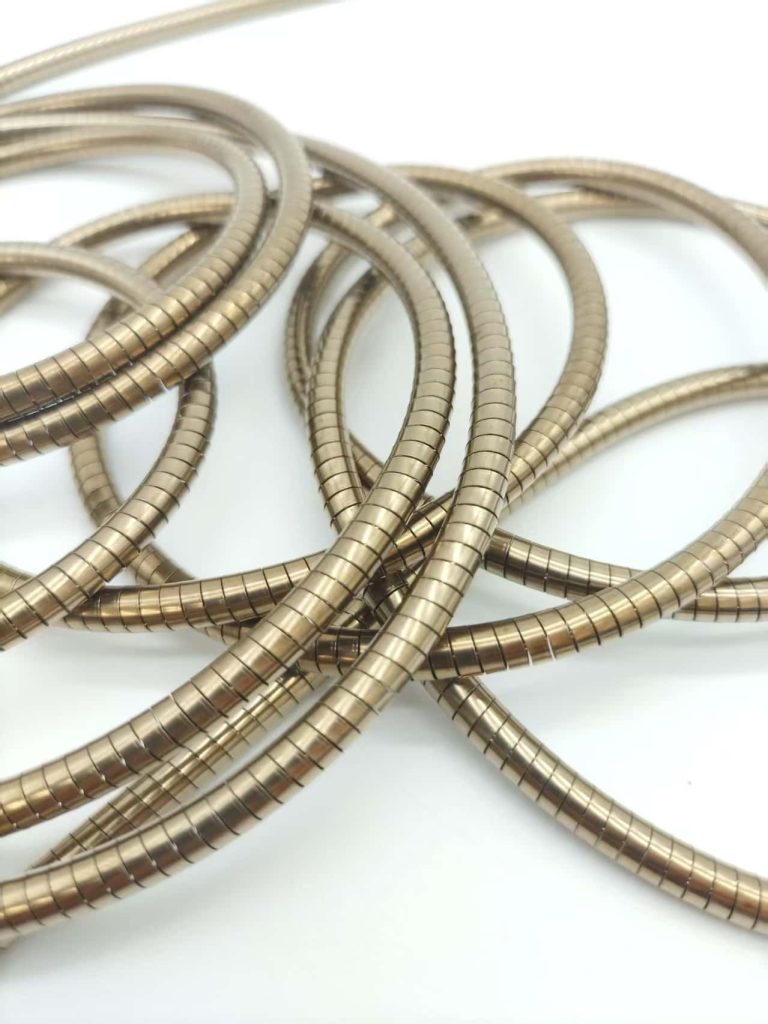
The three most commonly used materials in engineering applications are:
Test Conditions:
| Material |
Elastic Retention |
Fatigue Life | Corrosion Resistance | Electrical Conductivity | Cost Level |
| Elgiloy | ★★★★★ | ★★★★★ | ★★★★★ | Medium | High |
| Stainless Steel | ★★★★ | ★★★★ | ★★★★ | Low | Medium |
| Beryllium Copper | ★★★★ | ★★★ | ★★★ |
★★★★★ |
High |
👉 Engineering conclusion:
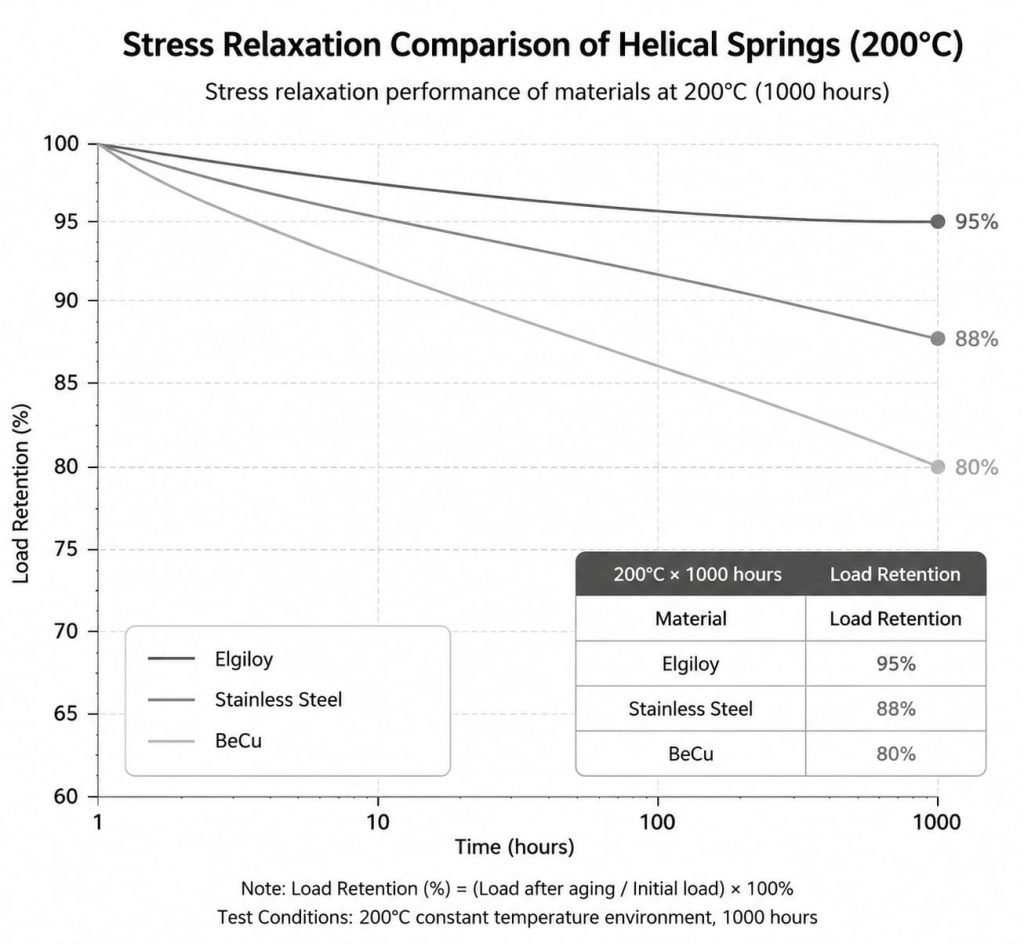
The key advantage of Elgiloy is not simply strength, but:Extremely low stress relaxation and excellent high-temperature stability.Stress Relaxation Comparison (200°C × 1000 hours):
| Material | Load Retention |
| Elgiloy | 95% |
| Stainless Steel | 88% |
| Beryllium Copper | 80% |
Engineering implication:Under long-term compression:
Stainless steel (especially 17-7PH) is widely used because:It provides the best overall balance between performance and cost。
Performance in Medium-Load Conditions,Test Conditions:
| Property | Performance |
| Fatigue life | High |
| Cost efficiency | Excellent |
| Manufacturability | Good |
| Stability | Medium-high |
👉 Typical applications:Handa Spring Technical Resource Center
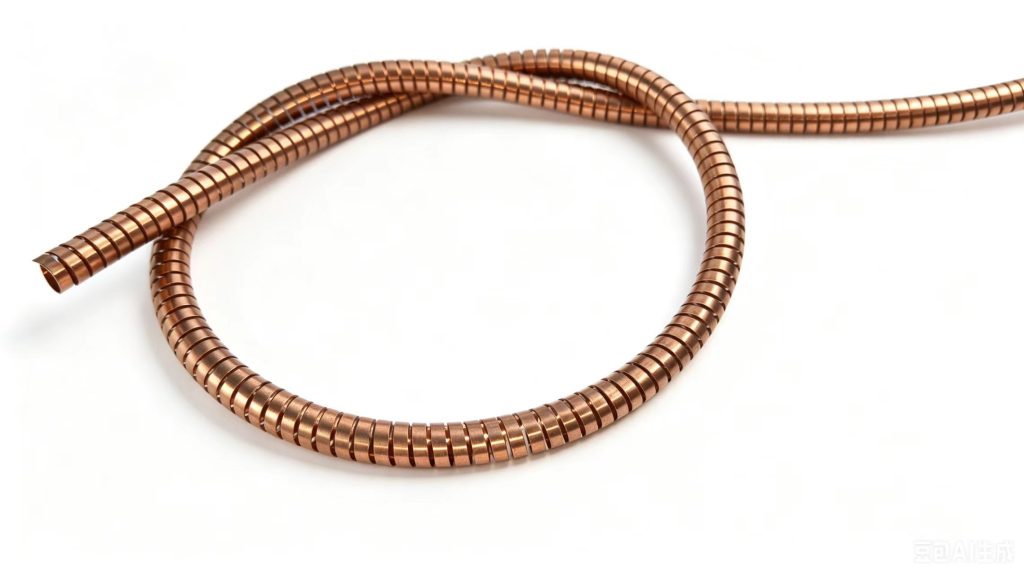
The advantage of beryllium copper is not strength, but:High electrical conductivity + good elasticity + moderate fatigue resistance
| Property | Performance |
| Elastic recovery | Medium-high |
| Fatigue life | Medium |
| Friction behavior | Good |
| Conductivity | Excellent |
👉 Engineering conclusion: Beryllium copper is suitable for:
Unified test conditions:
| Material | 500K cycles | 1M cycles | 3M cycles | Trend |
| Elgiloy | Stable | Stable | Stable | Excellent |
| Stainless Steel | Stable | Slight degradation | Moderate degradation | High |
| Beryllium Copper | Stable | Noticeable degradation | Falilure risk | Medium |
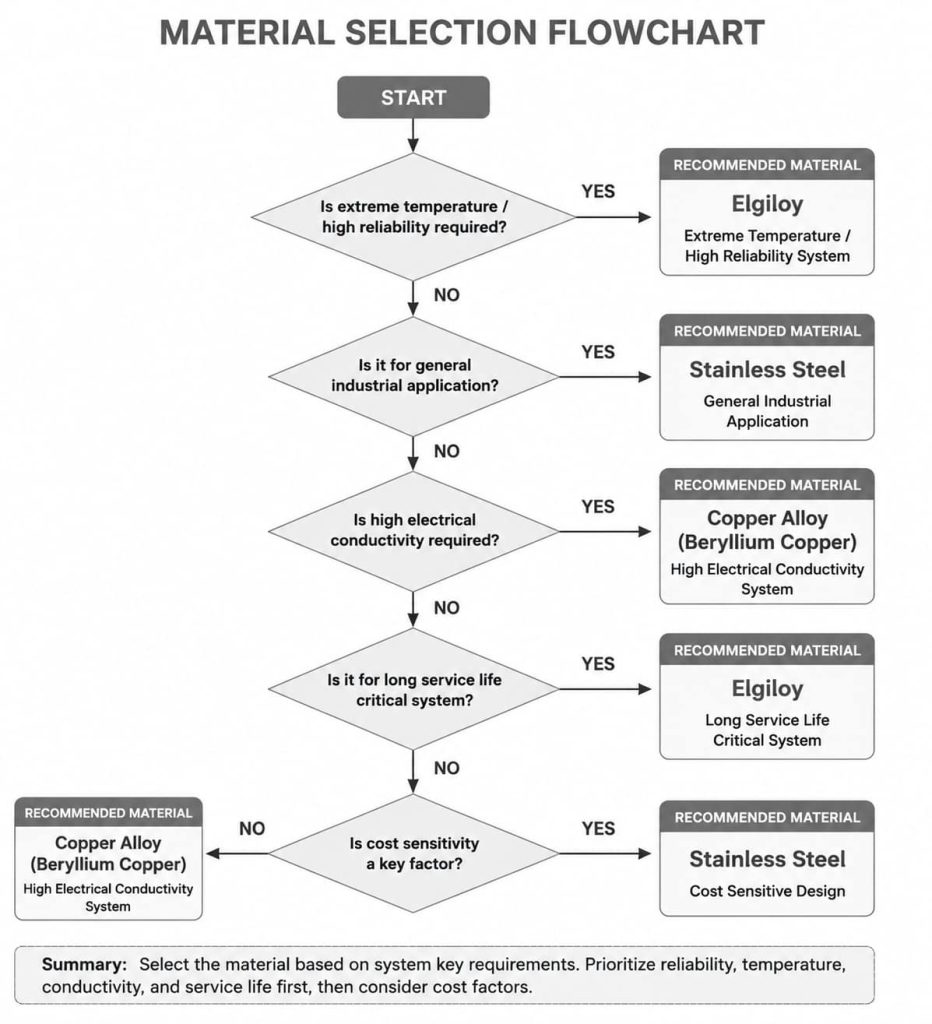
Material Selection Decision Table:
| Application Requirement | Recommended Material |
| Extreme temperature / high reliability | Elgiloy |
| General industrial use | Stainless steel |
| High conductivity systems | Beryllium copper |
| Long-life critical systems | Elgiloy |
| Cost-sensitive designs | Stainless steel |
👉 If you are unsure about material selection:Contact our engineers for Helical Spring selection support
Many failures are not caused by wrong materials, but by:
① Focusing only on initial strength instead of stress relaxation
② Ignoring long-term high-temperature effects
③ Overlooking fatigue degradation under cyclic loading
④ Neglecting friction–structure interaction
In Helical Spring design:Structure defines how it works, material defines how long it works,The key differences between the three materials are:
More technical resources:>https://www.handaspring.com/:
✔ Free material selection support
✔ Application-based engineering evaluation
✔ Custom Helical Spring design
✔ Sample and testing support
