7 Mistakes in Canted Coil Spring Groove Design

Learn the top mistakes in canted coil spring groove design and how to avoid them. Improve performance, contact force, and service life with proper groove geometry.

Canted coil springs are widely used in electrical contacts, EMI shielding, sealing systems, and precision mechanical assemblies. While engineers often focus on material selection or spring force, groove design is just as critical to achieving reliable performance.

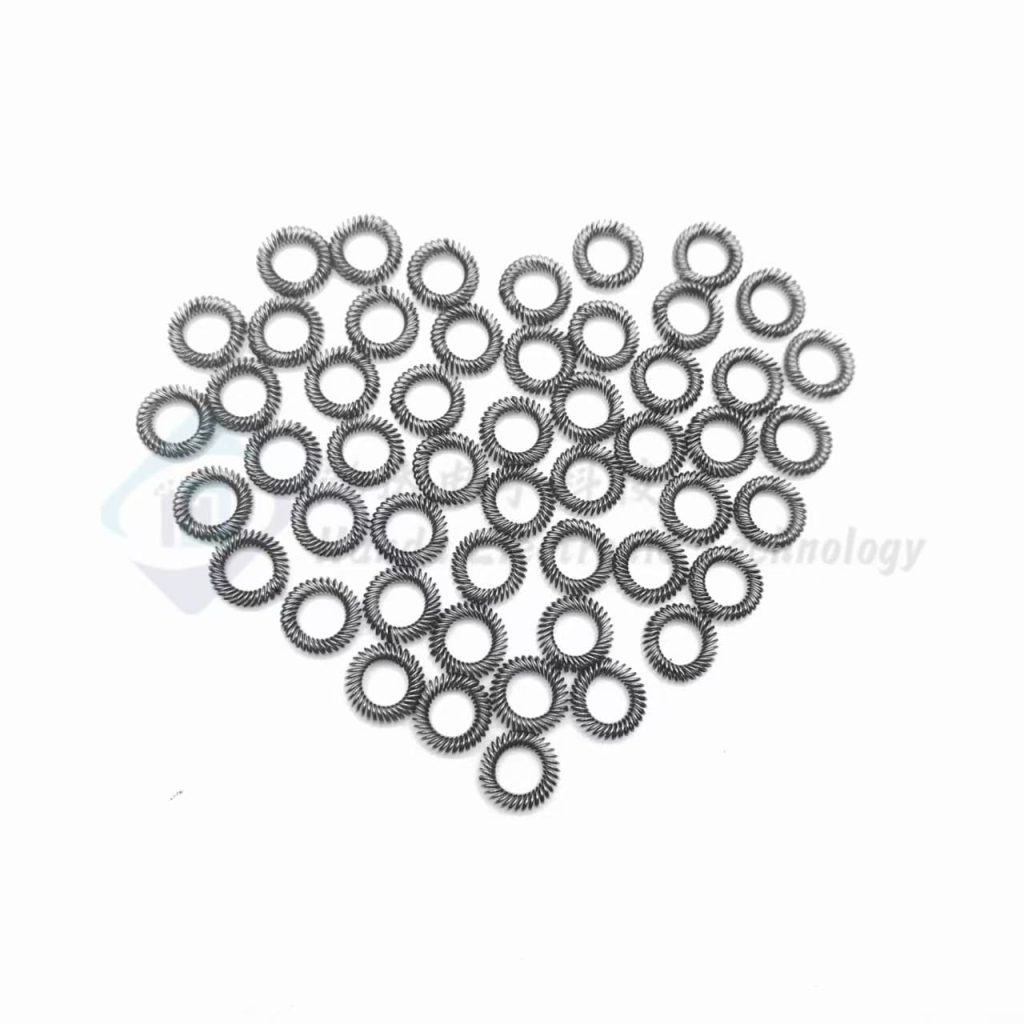
Hastelloy 276 canted coil springs-Handaspring

Improper groove geometry can lead to uneven load distribution, premature wear, loss of contact force, and even spring failure. This article outlines the most common mistakes in canted coil spring groove design and provides best-practice guidance to help engineers optimize performance and longevity.


Why Groove Design Matters for Canted Coil Springs

Unlike traditional compression springs, canted coil springs rely on controlled lateral movement within a groove. The groove directly affects:

  • Spring deflection behavior
  • Contact force consistency
  • Electrical conductivity and EMI shielding efficiency
  • Wear rate and service life

Even a high-quality canted coil spring will underperform if the groove is poorly designed.


Mistake #1: Incorrect Groove Width

Problem

One of the most common errors is specifying a groove width that is either too narrow or too wide.

  • Too narrow → excessive friction, restricted movement
  • Too wide → instability, uneven contact force

Impact

  • Loss of constant force characteristics
  • Increased wear and deformation
  • Reduced electrical reliability

Best Practice

The groove width should allow controlled radial and axial movement without allowing the spring to twist or collapse. Always follow the spring manufacturer’s recommended tolerances.


Mistake #2: Improper Groove Depth

Problem

Groove depth is often underestimated or copied from compression spring designs, which are not suitable for canted coil springs.

Impact

  • Insufficient deflection range
  • Inconsistent force output
  • Reduced shielding or contact effectiveness

Best Practice

Groove depth must accommodate:

  • Free height of the canted coil spring
  • Required working deflection
  • Assembly tolerances

A properly designed groove ensures the spring operates within its optimal deflection window.


Mistake #3: Sharp Edges and Poor Surface Finish

Problem

Sharp groove edges or rough machining surfaces can damage the spring during installation or operation.

Impact

  • Coil abrasion and micro-cracks
  • Accelerated fatigue failure
  • Increased electrical resistance

Best Practice

  • Add chamfers or radiused edges
  • Maintain a smooth surface finish
  • Avoid burrs and tool marks

This is especially critical for gold-plated or silver-plated canted coil springs used in electrical applications.


Mistake #4: Ignoring Groove Tolerances

Problem

Designers sometimes apply overly loose tolerances to simplify machining or reduce cost.

Impact

  • Spring movement becomes unpredictable
  • Loss of uniform contact pressure
  • EMI shielding leakage

Best Practice

Tight but realistic tolerances ensure:

  • Consistent spring engagement
  • Stable force output across the entire assembly
  • Long-term performance repeatability

Mistake #5: Using the Wrong Groove Shape

Problem

Not all grooves should be rectangular. Some applications require U-shaped, V-shaped, or stepped grooves, but this is often overlooked.

Impact

  • Uneven load distribution
  • Localized stress points
  • Reduced mechanical and electrical efficiency

Best Practice

Select groove geometry based on:

  • Application type (sealing, grounding, contact)
  • Required deflection direction
  • Environmental conditions

Consulting with a canted coil spring manufacturer early in the design phase can prevent costly redesigns.


Mistake #6: Neglecting Thermal Expansion

Problem

Groove design often ignores the effects of thermal expansion, especially in aerospace, automotive, and semiconductor applications.

Impact

  • Groove constriction at high temperatures
  • Spring over-compression
  • Loss of contact force at low temperatures

Best Practice

Account for:

  • Differential expansion between housing and spring
  • Operating temperature range
  • Material coefficients of thermal expansion

This ensures stable performance under extreme conditions.


Mistake #7: Assuming One Groove Design Fits All Materials

Problem

Different spring materials behave differently within the same groove design.

Impact

  • Overstressing softer materials (e.g., BeCu)
  • Underutilizing high-strength alloys (e.g., Inconel®, MP35N)

Best Practice

Groove design should be matched to:

  • Spring material
  • Wire diameter
  • Coil angle

Material-specific optimization improves both durability and functional performance.


Common Groove Design Errors vs. Recommended Practices

Design ElementCommon MistakeRecommended Approach
Groove WidthToo tight or too looseManufacturer-specified tolerance
Groove DepthBased on compression springsDesigned for canted coil deflection
Edge FinishSharp edges, burrsRadiused edges, smooth finish
TolerancesOverly looseControlled, application-specific
Groove ShapeGeneric rectangularOptimized per application

How Proper Groove Design Enhances Canted Coil Spring Performance

When groove design is optimized, canted coil springs deliver:

  • Constant force over a wide deflection range
  • Reliable electrical contact and EMI shielding
  • Reduced wear and longer service life
  • Improved assembly consistency

For high-reliability applications, groove design is not optional—it is a critical engineering parameter.


結論

Many failures attributed to canted coil springs are actually caused by poor groove design, not the spring itself. By avoiding these common mistakes and following proven design principles, engineers can significantly improve performance, reliability, and product lifespan.

Early collaboration with an experienced canted coil spring manufacturer ensures that groove geometry, material selection, and tolerances are fully aligned with application requirements—saving time, cost, and future redesigns.