Introduction: Why Do So Many Canted Coil Spring Projects Fail Because of Groove Design?
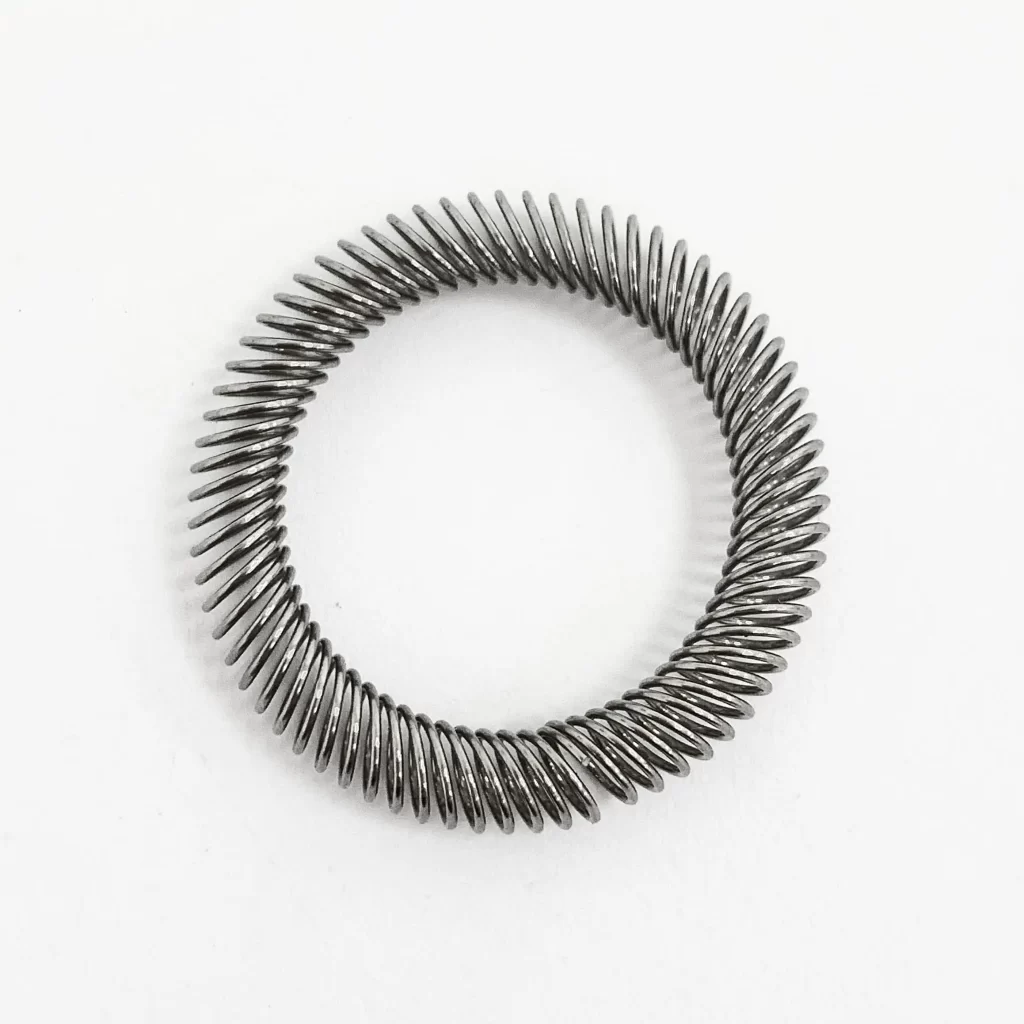
In spring-energized seals, conductive connectors, semiconductor equipment, and high-reliability mechanical systems, the Canted Coil Spring has become a widely used solution thanks to its stable load characteristics, low friction, and long service life.
However, in real-world projects, engineers often encounter situations such as:
- Prototypes perform normally in testing, but performance deteriorates after mass production: For example, whilst sealing performance is excellent during laboratory testing, leaks or performance instability begin to occur one after another once several hundred units have entered production.
- Excessive sealing activation force: For instance, cylinders, valves or actuators do not operate smoothly at start-up, requiring greater driving force and even exhibiting sticking.
- Abnormal spring wear: In some equipment, after several thousand cycles, the spring surface already shows obvious scuff marks, loss of plating, or even fracture, whereas the design life was originally intended to reach hundreds of thousands of cycles or more.
- Service life far below expectations: A sealing system originally planned for continuous use over 3–5 years may experience seal failure after only a few months of operation, necessitating early repair or replacement.
- Difficulty installing springs or even spring damage: For example, assembly personnel may find it difficult to insert the spring into the groove; during installation, the spring is prone to twisting, jamming or deformation, and in severe cases, it may snap or become permanently deformed.
Based on extensive application experience, we have found that:
Many canted coil spring failures are not caused by the spring itself, but by improper groove design.
In other words, even the best canted coil spring cannot deliver optimal performance if it is installed in an improperly designed groove.This article discusses the seven most common groove design mistakes engineers make when designing for canted coil springs.
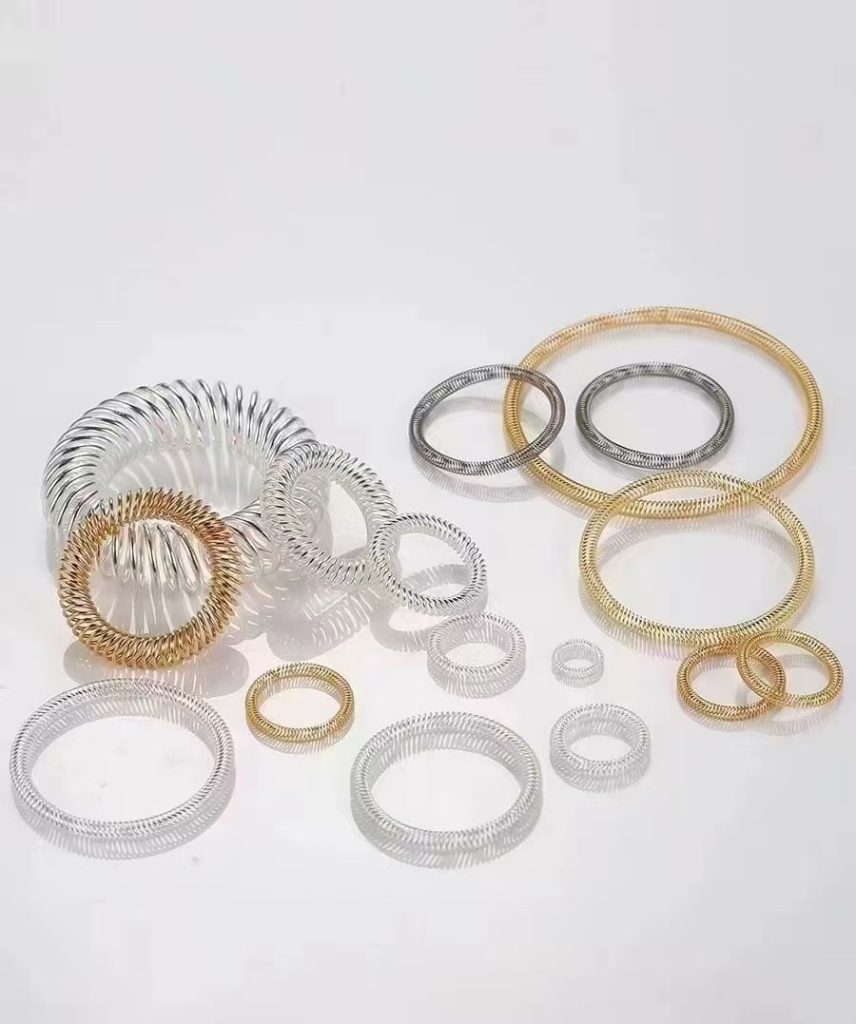
1: Designing the Groove Too Deep, Resulting in Insufficient Spring Compression
To prevent the spring from falling out during assembly, some engineers intentionally design deeper grooves.While this may simplify installation, an overly deep groove often results in insufficient compression of the canted coil spring.Insufficient compression may lead to:
- Insufficient preload: The spring thrust is inadequate, preventing the sealing surfaces from making full contact, which can lead to premature leakage.
- Reduced sealing compensation capacity: When the seal wears or its dimensions change, the spring is unable to compensate for the gap in a timely manner, resulting in a gradual decline in sealing performance.
- Poor contact stability: When the equipment vibrates or moves, localised separation of the contact surfaces is likely to occur, leading to unstable performance.
- Leakage is more likely to occur under low-pressure conditions: At low pressure or during the start-up phase, when the medium pressure is low, the seal relies more heavily on the spring to provide sealing force, making leakage more likely to occur.
Compression Test Comparison,Test Conditions:
- Spring Material: Elgiloy
- Operating Temperature: 25°C
- Working Medium: Hydraulic oil
- Spring Cross-Section Height: 2.0 mm
| Actual Compression Rate |
Initial Load (N/mm) |
Low-Pressure Sealing Performance |
| 8% |
0.16 |
Leakage likely |
| 15% |
0.31 |
Generally stable |
| 20% |
0.42 |
Stable |
| 30% |
0.58 |
Optimal |
For most spring-energized seal applications, a compression range of 15% to 30% is generally recommended for canted coil springs.👉 Not sure whether your groove depth is appropriate?🔗 Consult Handa engineers for free groove design recommendations
2: Designing the Groove Too Shallow, Causing Over-Compression
Another common issue occurs when engineers intentionally reduce groove depth in an attempt to increase preload force.In reality, over-compression is often more harmful than under-compression.Excessive compression can result in:
- Increased friction: Friction between the seal and the moving surface increases, leading to greater operating resistance; in severe cases, this may result in difficulty starting.
- Accelerated seal wear: Excessive contact pressure accelerates wear on the seal lip, leading to premature seal failure.
- Increased permanent deformation: Prolonged excessive compression of the spring reduces its ability to rebound, and may even prevent it from returning to its original shape.
- Reduced service life: When springs and seals are subjected to excessive stress over a prolonged period, they are prone to premature failure.
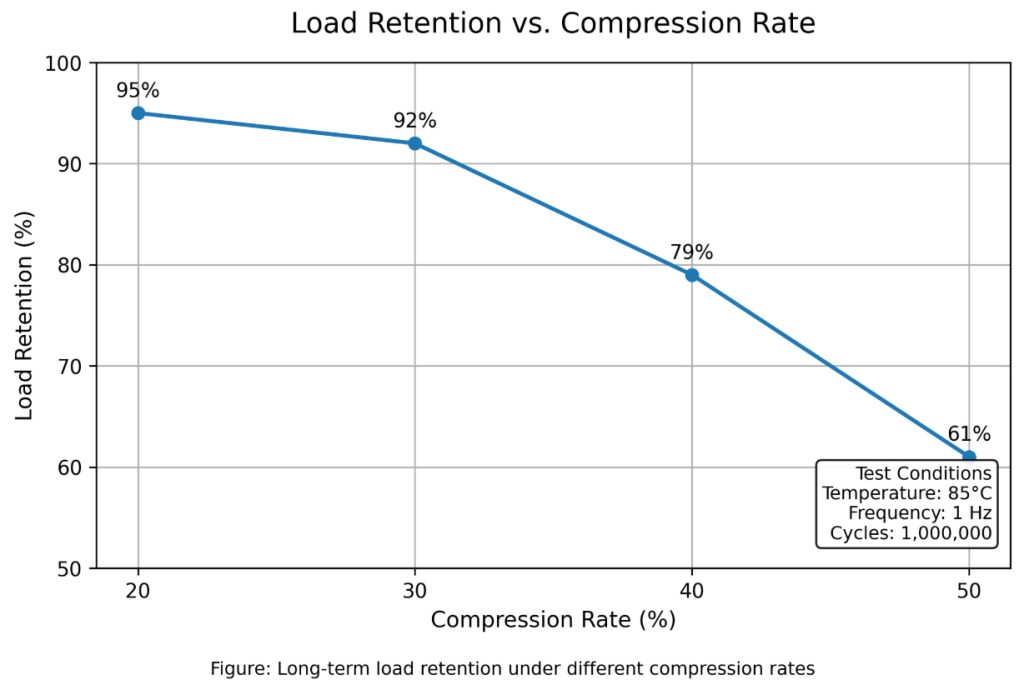
Cycle Life Test,Test Conditions:
- Temperature: 85°C
- Cycling Frequency: 1 Hz
- Total Cycles: 1,000,000
| Compression Rate |
Load Retention |
Permanent Set |
| 20% |
95% |
1.8% |
| 30% |
92% |
3.5% |
| 40% |
79% |
8.6% |
| 50% |
61% |
16.2% |
Test results show that canted coil spring performance deteriorates significantly when compression exceeds 40%.Learn more about our products:🔗 Explore Our Canted Coil Spring Product Series
3: Insufficient Groove Width Allowance, Causing Spring Binding
Some engineers design grooves based solely on nominal spring dimensions while overlooking factors such as:
- Manufacturing tolerances: There is always a certain degree of deviation between the actual dimensions of a component and its design dimensions;
- Thermal expansion: When equipment operates at high temperatures, components expand;
- Assembly deviations: During actual assembly, positional misalignment or concentricity errors may occur;
- Operating environment: During equipment operation, components may also undergo displacement or vibration.
As a result, the canted coil spring may not deform freely during operation.
Dynamic Application Test,Test Conditions:
- Reciprocating Speed: 250 mm/s
- Operating Temperature: 60°C
- Working Medium: Lubricating oil
| Groove Width Clearance |
Assembly Difficulty |
Operating Condition |
| +0.05 mm |
Very difficult |
Severe binding |
| +0.10 mm |
Difficult |
Occasional binding |
| +0.20 mm |
Normal |
Stable |
| +0.30 mm |
Easy |
Stable |
In most applications, it is recommended that groove width be designed 0.1 to 0.3 mm wider than the spring width.👉 Need help designing a standard groove?Contact us for groove drawing support。
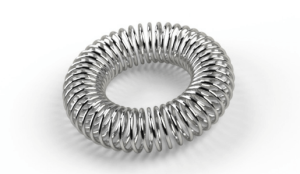
4:Ignoring Lead-In Chamfers and Damaging the Spring During Installation
If the groove entrance contains sharp edges, the canted coil spring can easily be scratched or damaged during installation.This issue is particularly common with plated springs and miniature spring sizes.
Installation Test,Test Conditions:
- Number of Installations: 100
- Spring Material: Silver-Plated Beryllium Copper
| Groove Entrance Design |
Spring Damage Rate |
| No chamfer |
31% |
| 0.2 × 45° chamfer |
8% |
| R0.3 radius |
5% |
It is generally recommended to add either:A 0.2 mm × 45° chamfer, orA 0.2–0.5 mm radius to the groove entrance.
5: Ignoring Tolerance Stack-Up Analysis
Many projects perform well during prototype testing but encounter failures during mass production.In many cases, the root cause is the absence of tolerance stack-up analysis.
Tolerance Accumulation Example
| Parameter |
Nominal Dimension |
Tolerance |
| Spring Height |
2.00 mm |
±0.05 mm |
| Groove Depth |
1.55 mm |
±0.03 mm |
| Mating Clearance |
0.50 mm |
±0.04 mm |
Theoretical Compression Rate: 20%,Actual Compression Range: 11% to 29%.This means that within the same production batch:Some springs may be under-compressed,Others may already be over-compressed.Therefore, engineers should perform:
- Check whether the spring is compressed too much in the tightest assembly;
- Check whether the spring can still provide sufficient preload in the loosest assembly;
- Calculate the cumulative tolerances of all parts to confirm that the spring remains within the normal operating range at all times.
Learn more technical information:🔗Visit the Handa Spring Website
6: Failing to Consider Temperature Effects on Groove Dimensions
Temperature variations cause both metals and polymers to expand or contract.If groove dimensions are designed only at room temperature, actual operating conditions may result in:
- The spring is too tight or too loose;
- Movement becomes more difficult;
- It takes more effort to start the equipment;
High- and Low-Temperature Test,Test Conditions:
- Groove Material: 316L Stainless Steel
- Spring Material: Elgiloy
| Temperature |
Compression Change |
| 25°C |
Baseline |
| 150°C |
+6% |
| -55°C |
-4% |
For aerospace, cryogenic, and high-temperature applications, thermal expansion calculations are strongly recommended.
7: Copying Groove Dimensions from Previous Projects Without Re-Evaluation
Many engineers prefer to reuse groove drawings from previous projects.However, operating conditions often vary significantly, including differences in:
- Different pressures: Some operate at just a few MPa, while others exceed 50 MPa;
- Different media: They may come into contact with air, hydraulic oil, or highly corrosive chemicals;
- Different temperatures: Some operate at room temperature, while others must function at -50°C or above 200°C;
- Different service lives: Some are used for only a few months, while others are required to operate continuously for several years.
Design Priorities for Different Applications
| Application |
Key Design Consideration |
| Dynamic sealing |
Low friction and wear resistance |
| Static sealing |
Adequate preload |
| High-temperature service |
Thermal expansion compensation |
| High-cycle applications |
Compression control |
| Vacuum systems |
Minimizing wear debris |
Therefore, groove design should always be optimized based on the specific application rather than copied directly from another project.
What Parameters Should Engineers Confirm Before Designing a Canted Coil Spring Groove?
Before beginning groove design, engineers should first define:
- Temperature: Will the equipment operate at room temperature or in high- or low-temperature environments?
- Pressure: What operating pressure must it withstand?
- Medium: Will it come into contact with air, oil, or chemical media?
- Preload: What initial sealing force is required?
- Stroke: How far does the seal need to move?
- Service Life: How long is it expected to operate, or how many cycles will it undergo?
- Machining Capability: Can existing equipment machine the required groove dimensions and precision?
Defining these parameters early in the project can significantly reduce redesign costs later.👉 Not sure how to select the appropriate canted coil spring and groove dimensions?🔗 Consult Handa engineers today.
Conclusion
The performance of a canted coil spring depends not only on the spring itself, but also on whether the groove has been properly designed.In many applications, an optimized groove design can:
- Improves seal reliability: Ensures consistent contact between the sealing surfaces, reducing the risk of leakage.
- Reduces friction: Prevents excessive spring compression, reducing operating resistance and wear.
- Extends service life: Reduces long-term stress on springs and seals, minimizing premature failure.
- Reduces maintenance costs: Lowers failure rates and replacement frequency, minimizing downtime for repairs.
If you are developing a new sealing project or experiencing issues such as insufficient service life or excessive friction, please visit:🔗www.handaspring.com.Our engineering team can provide:
✓ Free application support
✓ Standard groove drawings
✓ Sample testing assistance
✓ Customized structural optimization solutions


