


孔食、応力腐食割れ、ガルバニック腐食を含むキャントコイルスプリングにおける一般的な腐食問題について学び、過酷な環境で信頼性の高い性能を発揮するための材料選定とメッキによる実証済みの防止策をご覧ください。.
カンテッドコイルスプリングは、半導体装置、航空宇宙、医療機器、石油・ガスなどの産業において、シール、EMIシールド、電気接点、機械的ラッチに重要な役割を果たす精密部品です。そのユニークなカント形状は、広い撓み範囲でほぼ一定の力を発揮し、要求の厳しいアプリケーションに不可欠です。.
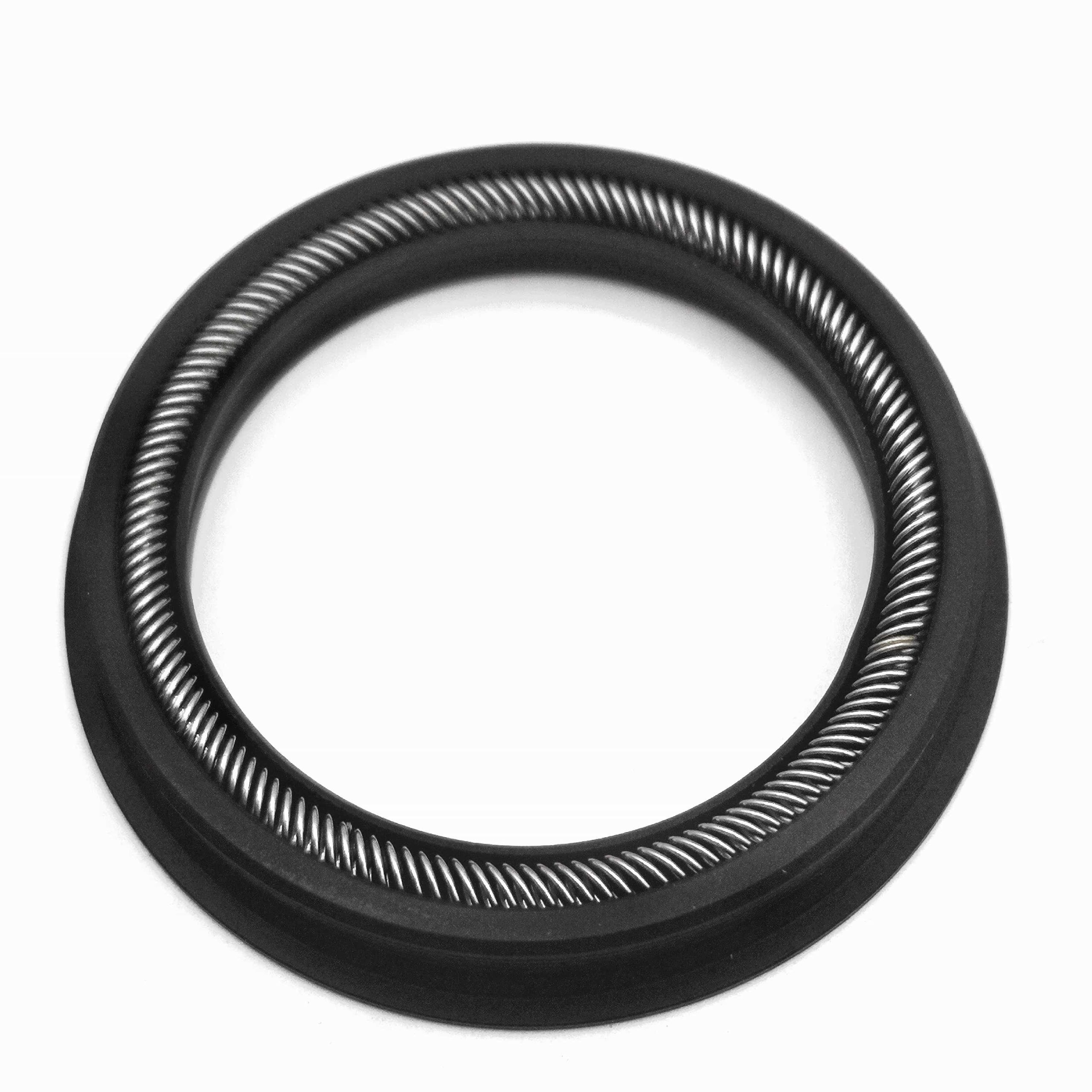
しかし、これらのスプリングは、湿気、塩水噴霧、化学薬品、または極端な温度にさらされる過酷な環境で使用されることがよくあります。腐食はスプリングの早期故障の最も一般的な原因であり、力の減衰、接触抵抗の増加、シールド効果の損失、そして最終的にはシステムの故障につながります。.
この記事では、キャントコイルスプリングが直面する具体的な腐食の脅威を検証し、腐食攻撃下で異なる材料がどのように、そしてなぜ挙動するのかを説明し、十分な情報に基づいた材料の選択と表面処理によって腐食を防ぐための実践的な戦略を提供します。.
コイルスプリング は、精密成形され、熱処理され、しばしばメッキされた金属ストリップまたはワイヤーから製造される。単純な構造部品とは異なり、スプリングは弾性変形によって機械的エネルギーを蓄え、放出するように設計されています。そのため、表面の損傷に特に敏感です。.
腐食は表面から始まる。軽微な孔食や局部的な腐食であっても、応力集中点を形成し、それが繰返し荷重下で亀裂の起点となる。. .ひとたびクラックが発生すると、疲労伝播は加速され、早期破壊につながる。さらに、接触面の腐食生成物は電気抵抗を増加させ、EMIシールド効果とシグナルインテグリティを損なう。.
コイルスプリングは通常、使用中に持続的な機械的応力を受けます。引張応力と腐食環境の組み合わせは、最も危険で陰湿な腐食の一つである応力腐食割れ(SCC)の完璧な条件を作り出します。.
カント付きコイルスプリングを脅かす特定の腐食メカニズムを理解することは、効果的な予防への第一歩です。.
孔食は局部的な腐食の一種で、金属表面に小さな空洞や「ピット」を生じさせる。ピットは目視で発見するのが難しく、材料の奥深くまで入り込む可能性がある一方、周囲の表面は影響を受けていないように見えるため、特に危険である。.
原因:孔食は通常、ステンレス鋼のような不動態酸化被膜で保護されている材料で発生する。塩化物イオン(塩水、凍結防止剤、工業プロセスによる)が局部的に不動態層を破壊し、電気化学セルを形成して、その下にある露出した金属を急速に腐食させる。.
バネの症状:ピット部での断面積の減少は、局所的な応力集中、バネ力の低下、そして繰返し荷重下での最終的な破壊につながる。.
隙間腐食は、滞留溶液が蓄積する遮蔽領域で発生する。溝に設置されたカントコイルスプリングの場合、スプリングと溝壁の界面が自然な隙間を形成します。.
原因:隙間内の酸素欠乏は、差動曝気セルを作り出し、隙間内の腐食を加速させるが、外部表面は保護されたままである。.
バネの症状:隙間攻撃は通常、スプリングがハウジングと接触する部分で発生し、接触の完全性が失われ、電気抵抗が増加し、最終的にスプリングの機能が失われます。.
ガルバニック腐食は、2つの異種金属が電解質(水分など)の存在下で電気的に接触したときに発生する。より活性な金属は加速された速度で腐食し、より貴金属は保護される。.
原因:多くのキャントコイルスプリング用途では、スプリングはステンレス鋼またはベリリウム銅で作られており、ハウジングまたは嵌合面はアルミニウムです。アルミニウムはステンレス鋼や銅合金よりも活性が高く、強いガルバニックカップルを形成します。水分が存在する場合、アルミニウムの腐食は劇的に加速します。.
バネの症状:スプリング自体はほとんど腐食が見られないかもしれないが、その周りのアルミニウム製ハウジングは急速に穴が開き、材料が失われ、スプリングが緩み、シールが破壊される。.
応力腐食割れは、持続的な引張応力と腐食環境の複合作用である。材料に脆性亀裂を生じさせ、それが伝播していく。.
原因:斜めコイルばねは、設計上一定の機械的応力にさらされています。特定の腐食性媒体(ステンレス鋼の塩化物、銅合金のアンモニアなど)と組み合わせると、SCCが応力集中部で発生し、急速に伝播する可能性があります。.
バネの症状:表面に顕著な腐食の見られない、突然の予期せぬ破壊。.
腐食疲労はSCCと似ていますが、静的な負荷ではなく、周期的な負荷の下で発生します。スプリングは、腐食性環境にさらされながら、交互に応力(振動や圧縮/弛緩の繰り返しサイクルなど)を受けます。.
原因:腐食性の攻撃は亀裂の発生を促進し、繰返し荷重は亀裂の進展を促進する。この組み合わせは、非腐食性環境での運転に比べ、疲労寿命を桁違いに低下させる。.
バネの症状:予想より少ないサイクルで早期破壊。列車ばねの故障解析により、有機皮膜を透過した水蒸気と腐食性イオンが腐食ピットを生成し、それが応力集中点となり、繰返し荷重下で腐食疲労破壊に至ることが明らかになった。.
キャントコイルスプリングに一般的に使用される高合金材料ではあまり一般的ではありませんが、アグレッシブな環境にさらされた高貴でない材料では均一な腐食が発生する可能性があります。露出した表面全体が比較的均一な速度で腐食し、断面とばね力が徐々に減少します。.
原因:酸、アルカリ、または基材を一様に腐食するその他の腐食媒体に長時間さらされること。.
バネの症状:時間の経過とともに徐々に力が衰え、最終的には機能を失う。.
つまり、環境を理解し、適切な基材を選択し、適切な表面処理を施し、健全な設計を実践することである。.
材料の選択は、最も効果的な腐食防止策です。下の表は、一般的なキャントコイルスプリング素材の耐食性特性をまとめたものです:
詳細な材料ガイダンス:
301ステンレス鋼:冷間加工後の強度が高く、大量生産にはコスト効率が良いが、耐食性は304や316より劣り、海洋や塩化物の多い環境には適さない。.
304ステンレス鋼:優れた耐食性と耐酸化性を備え、クリーンで湿度の高い環境に適しているため、医療機器、食品用機器、EMIシールド用途に最適。.
316ステンレス鋼:モリブデンを含有し、特に塩化物に対して優れた耐食性を発揮。特に塩化物に対する耐食性に優れています。海洋機器、化学処理、塩分暴露が懸念される屋外EMIシールドに最適なステンレス鋼です。.
ベリリウム銅:鋼鉄よりも耐食性・耐酸化性に優れ、大気環境、海洋環境、弱酸性・アルカリ環境で優れた耐久性を発揮。. .オフショアや化学用途に最適。.
エルジロイ:耐食性に優れた万能合金のひとつ。ISO 15156-3:2015(NACE)に準拠したサワーガス環境に耐性があり、水素脆化が非常に起こりにくい。化学処理および石油・ガス産業における最良の選択肢。.
ハステロイ® C-276:耐孔食性、耐隙間腐食性、耐応力腐食割れ性に優れています。腐食性の高い環境、過酷な海洋用途、塩素雰囲気に最適。.
インコネル:高温強度と耐食性で知られ、化学処理産業における極低温・高温用途を含む過酷な環境に適している。.
母材だけでは十分な耐食性が得られない場合や、相手材とのガルバニック相溶が懸念される場合は、めっきが解決策となる。.
カント付きコイルスプリングの一般的なメッキは以下の通り:
| メッキ | メリット | 最適 | 制限事項 |
|---|---|---|---|
| 錫 | 良好な導電性、はんだ付け性、低コスト | 一般的なEMIシールド、コスト重視の用途 | 柔らかく、耐摩耗性に乏しい |
| ニッケル | 硬度、耐摩耗性、良好な耐食性 | 他のメッキの下地、工業環境 | ニッケル層は非常に高い硬度と耐摩耗性を持ち、耐食性にも優れている。 |
| シルバー | 最高の導電性、良好な耐酸化性 | 高周波EMIシールド、高信頼性コンタクト | 高価、変色しやすい(ただし導電性は維持される) |
| ゴールド | 優れた耐食性、生体適合性 | 医療機器、航空宇宙、クリティカルコンタクト | 非常に高価 |
最適な導電性、ガルバニック相溶性、耐食性を実現するため、金、銀、ニッケル、錫の各メッキを用意.
ガルバニック互換性に関する重要な注意:異種金属同士が接触しなければならない場合、ガルバニック相溶性は、接触を容易にし、母材を腐食から保護する仕上げやメッキによって管理されます。例えば、アルミニウムハウジングがステンレススチールスプリングと接触しなければならない場合、ガルバニック系列でアルミニウムに近い金属(スズやニッケルなど)でスプリングをメッキすることで、腐食速度を大幅に低減することができます。.
設計の細部は、腐食感受性に劇的に影響する:
湿気のこもりを防ぐ:溝は水はけをよくし、液体が溜まらないように設計する。鋭利な角は隙間ができて湿気がこもりやすいので避ける。.
制御圧縮:推奨レベルを超えてスプリングを圧縮し過ぎると、残留応力が増加し、SCCが発生しやすくなる。最適な圧縮は通常自由高さの20-30%。.
インターフェイスのシール:湿気にさらされる用途では、接点界面を乾燥した状態に保つため、EMIシールド・スプリングの外側に環境シール(Oリングやシリコン・ビードなど)を追加することを検討してください。適切な取り付けにより、湿気や腐食性物質の侵入を防ぎ、シールドの長期的な有効性を確保することができます。.
表面仕上げ:嵌合面は滑らかで(Ra≤0.8μm)、メッキを傷つけ、母材を侵食する可能性のあるバリがないこと。.
最適な材料選択と設計を行ったとしても、長期的な信頼性を確保するためには定期的な検査が不可欠である:
目視検査:スプリング表面およびハウジング接触部に変色、孔食、腐食生成物がないか点検する。.
フォーステスト:バネの力を定期的に測定し、腐食による断面欠損を示す力の減衰を検出する。.
電気テスト:接触抵抗をモニターする。抵抗値の上昇は、表面の酸化または腐食を示唆する。.
定期的な点検とメンテナンスにより、長期的なシールド効果を確保し、予期せぬ故障を防ぎます。.
使用環境を変えることができれば、簡単な対策で腐食リスクを劇的に減らすことができる:
湿度管理:電解液の生成を最小限に抑えるため、相対湿度が60%以下の空調された空間に装置を保管してください。.
異種金属との接触を避ける:ガルバニックカップルが避けられない場合は、絶縁ワッシャまたはコーティングを使用して、スプリングとハウジングを分離する。.
相手面に保護コーティングを施す:アルミニウム・ハウジングに陽極酸化処理を施したり、他の金属に化成皮膜を施したりすると、それらの金属の活性が低下し、ガルバニック・アタックが遅くなります。.
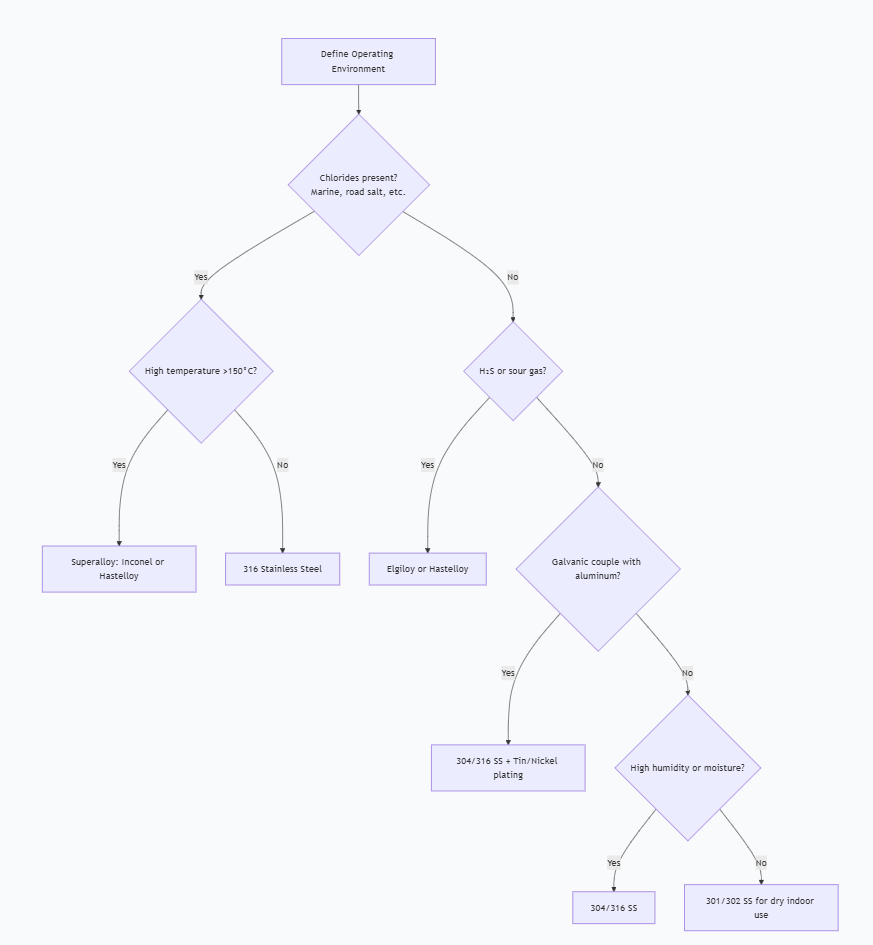
以下のフローチャートを使用して、腐食の危険性に基づいたキャントコイルスプリングの材料選定を行ってください:
シナリオ:半導体ウェハー製造チャンバーでは、アルミ製ハウジングとステンレス製ドアの間にEMIシールドが必要でした。6ヶ月の稼動後、エンジニアはEMI漏れの増加と断続的な接地の失敗に気づきました。.
診断:点検の結果、EMIシールド・スプリング周辺のアルミニウム・ハウジングに深刻な孔食が見つかった。クリーンルーム環境からの湿気の存在下で、ステンレス製スプリング(貴)とアルミニウム製ハウジング(活性)の間のガルバニックカップルがアルミニウムの腐食を加速していた。.
ソリューション:スプリングを裸の304ステンレス鋼から無電解ニッケルメッキを施した304ステンレス鋼に変更。ニッケルメッキはガルバニックシリーズのアルミニウムに近く、ガルバニック腐食の駆動電圧を下げる。.
結果:改造後、アルミニウムの孔食はなくなり、EMIシールド効果は3年間の運転を通じて安定していた。.
エキゾチック合金や貴金属メッキは初期コストが高いが、腐食環境では総所有コストが低くなることが多い。.
| 素材 | 相対コスト | 余命(過酷な海洋) | TCO格付け |
|---|---|---|---|
| 301 SS | 低い | <6カ月未満 | 貧しい |
| 304 SS | 低・中程度 | 1-2年 | フェア |
| 316 SS | 中程度 | 3~5年 | グッド |
| BeCu+Niプレート | 中・高 | 5-8年 | 非常に良い |
| エルジロイ | 高い | 8~10年以上 | 素晴らしい |
| ハステロイ | 非常に高い | 10年以上 | 素晴らしい |
エキゾチック合金は、特定の環境においてより高い耐性と長寿命を提供する。購入価格は高くなりますが、寿命が長く、メンテナンス/交換コストが低いため、多くの場合、これを相殺することができます。.
腐食 コイルスプリング は避けられません。お客様のアプリケーションを脅かす特定の腐食メカニズムを理解し、お客様の環境に適合する基材とめっきを体系的に選択することで、長期的に信頼できる性能を達成することができます。.
重要な原則は以下の通りである:
半導体、医療、航空宇宙、産業用アプリケーションでミッションクリティカルなシステムを設計するエンジニアにとって、キャントコイルスプリングの適切な腐食防止への投資は、信頼性、ダウンタイムの削減、製品寿命の延長という利益をもたらします。.
キャントコイルスプリングに最適な材料とメッキの選定にお困りですか?腐食リスク評価と材料の推奨については、当社のエンジニアリングチームにお問い合わせください。.
