Cantilever U Spring vs Coil Spring: Which One Is Right for Your Application?
Choosing between a cantilever U spring and a coil spring? Explore their unique advantages in load characteristics, space efficiency, and application suitability to determine the optimal spring for your engineering project.
Cantilever U Spring vs Coil Spring: Which One Is Right for Your Application?
When designing precision components for industries like aerospace, medical devices, or industrial machinery, engineers often face a critical decision: which spring type will deliver optimal performance for my specific application?
Two common contenders are the cantilever U spring (also known as U-shaped or meander spring) and the traditional coil spring. While both store and release mechanical energy, their distinct geometries and operating principles make each suitable for different applications .
This comprehensive guide compares these spring types across key performance parameters, helping you make an informed engineering decision.
Understanding the Basics
What is a Cantilever U Spring?
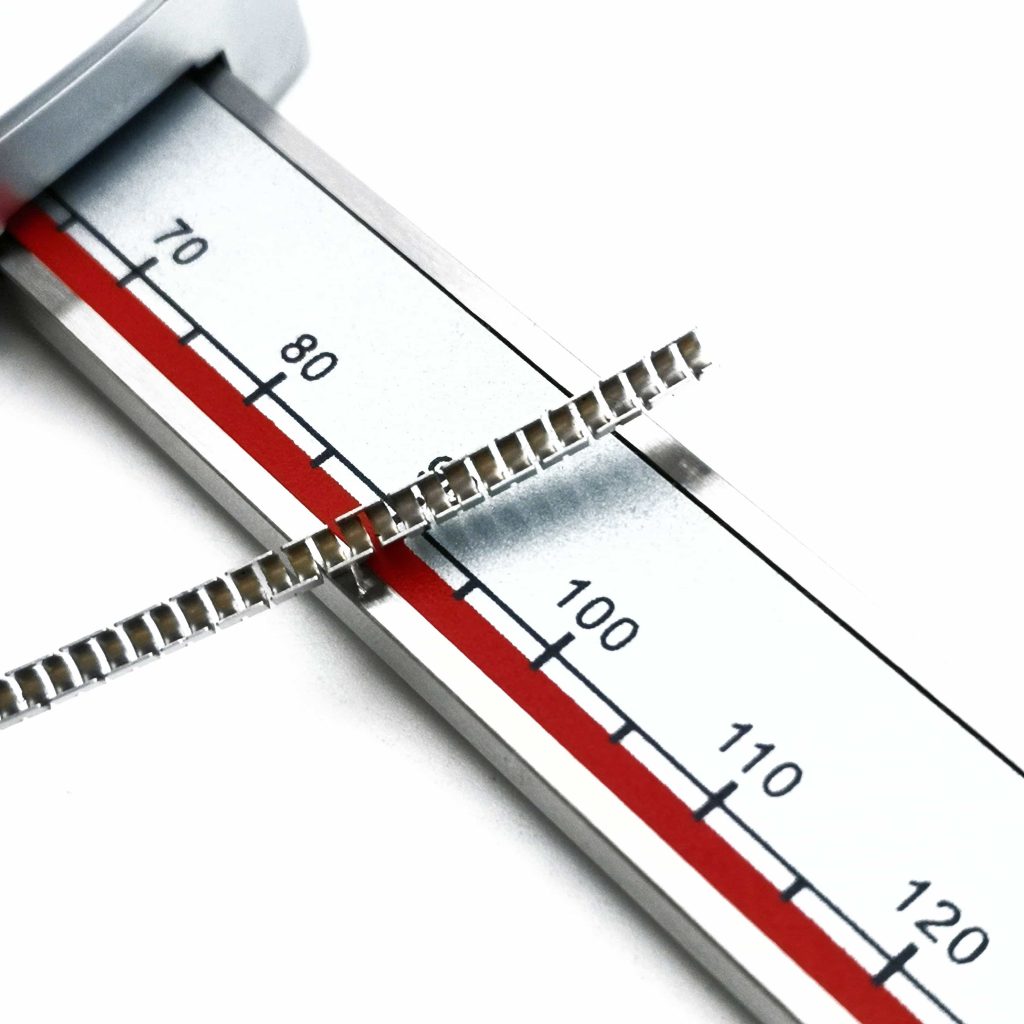
A cantilever U spring features a U-shaped or V-shaped configuration designed to exert force in a single direction . Unlike traditional springs that compress or extend along an axis, U springs utilize a cantilever beam principle—when force is applied, the “legs” of the U deflect, storing energy that is released upon unloading .
These springs are often referred to as meander springs or V-springs and are typically manufactured in industry-standard 000-500 series, including weld-free micro spring options .
What is a Coil Spring?
A coil spring is a helical mechanical component made from wire wound into a spiral shape . When force is applied, the coil compresses or extends, storing energy in its metal structure. Coil springs represent the broadest category of springs—from the tiny springs in retractable pens to massive automotive suspension springs .
Coil springs can be classified by their operating mode:
Compression springs: Designed to resist compressive forces
Extension springs: Designed to resist tensile forces
Torsion springs: Designed to resist rotational/twisting forces
Core Performance Comparison
Load Characteristics
The fundamental difference between these spring types lies in how they handle force:
Parameter
Cantilever U Spring
Coil Spring
Load Profile
High load capacity with greater deflection range
Very high load capacity but smaller deflection range
Force Direction
Primarily unidirectional force handling
Multi-directional (compression, extension, or torsion)
Load Distribution
Load distributes along spring edges, ideal for high-temperature applications
Load distributes helically, with potential stress concentration at coil ends
Deflection Behavior
Cantilever action provides progressive resistance
Constant or variable rate depending on coil design
Space and Design Efficiency
U springs offer significant advantages in compact spaces due to their unique geometry. Their U-shape allows for a smaller footprint compared to conventional coil springs, making them ideal for designs where space is at a premium .
Coil springs, by contrast, require axial space for compression or extension. A compression spring needs sufficient length to accommodate coil compression, while U springs can be designed to fit within tighter radial envelopes .
Application Suitability
Both spring types serve distinct application categories:
Cantilever U Spring Applications:
Spring-energized seals: Particularly effective in PTFE seal energizing for dynamic sealing applications
High-temperature environments: The load-distributing edges prevent material flow or embedding when seal materials soften
Fluid sealing systems: Hold seals firmly in place within hydraulic and pneumatic systems to prevent fluid escape
Aeroelastic modeling: Used in wind tunnel testing of truss-girder suspension bridges to simulate elastic stiffness
Medical implants: Potential for orthopedic applications requiring directional force absorption
Coil Spring Applications:
Automotive suspension: Shock absorption and load-bearing in vehicles
Industrial machinery: Die springs for shock absorption and actuation
Medical devices: Precision control in inhalers, surgical tools, and dental equipment
Aerospace: Cockpit instruments, landing gear systems, and control mechanisms
Electronics: Switches and connectors requiring precise force in tight spaces
Technical Specifications Comparison
Specification
Cantilever U Spring
Coil Spring
Typical Load Range
Medium to high
Low to very high
Deflection Capacity
Greater deflection range
Limited deflection (compression springs)
Temperature Tolerance
Excellent (with special alloys)
Good to excellent
Fatigue Life
Good, especially with proper material selection
Excellent for properly designed springs
Customization Flexibility
Typically standard sizes due to tooling needs, but custom possible
Highly customizable
Cost Efficiency
Moderate (specialized design)
High (mass production feasible)
Material Considerations
Both spring types can be manufactured from similar materials, with selection depending on environmental conditions:
Common Materials for Both Spring Types:
Stainless steel: Recommended for moisture-prone or corrosive environments; medical-grade 316 stainless steel offers excellent corrosion resistance
Carbon steel: High tensile strength for applications where strength is paramount
Special alloys: Inconel® and Hastelloy for extreme temperatures and corrosive environments
Beryllium copper: For electrical conductivity and non-magnetic requirements
Key Material Factors:
Coil springs: Performance influenced by number of coils, wire gauge, and material composition
U springs: Material selection critical for maintaining consistent pressure despite temperature fluctuations
Selecting the Right Spring for Your Application
Choose a Cantilever U Spring When:
You need consistent sealing force in dynamic applications where seal materials may soften at high temperatures
Space is limited and you require a compact design with high load capacity
Directional force handling is critical—applications requiring unidirectional stress management
You’re designing spring-energized seals for hydraulic or pneumatic systems where fluid containment is essential
Load must be applied close to seal lips while maintaining high forces over greater deflection
Choose a Coil Spring When:
Shock absorption is the primary requirement—coil springs excel at damping vibrations
You need both compression and extension capabilities within the same design
High-volume, cost-effective production is necessary
Your application requires constant or variable spring rates for specific load-deflection profiles
Long-established design standards and availability are priorities
Industry-Specific Recommendations
Aerospace Industry
U springs: Landing gear mechanisms requiring directional force efficiency; compact solutions without sacrificing performance
Coil springs: Stabilizing loads, door mechanisms, rudder control, and shock/vibration absorption
Medical Devices
U springs: Orthopedic implants requiring directional force absorption; spring-energized seals in surgical tools
U springs: Actuation systems requiring unidirectional force with reduced size and increased load capacity
Coil springs: General actuation, shock absorption, and die spring applications
Conclusion
Both cantilever U springs and coil springs have established places in modern engineering. U springs excel in applications requiring directional force handling, compact design, and consistent sealing pressure—particularly in spring-energized seals and high-temperature environments . Coil springs remain the versatile workhorses of industry, offering proven performance across virtually every sector with well-understood design parameters .
The optimal choice depends on your specific requirements: load characteristics, available space, environmental conditions, and the nature of force application. For sealing applications where maintaining constant pressure is critical, U springs offer distinct advantages. For general-purpose force storage and release across multiple directions, coil springs provide reliable, cost-effective solutions.