


In vacuum and cryogenic sealing systems, sealing performance depends not only on the sealing material but also on whether the spring can maintain a stable load over long-term operation.During actual applications, factors such as low-temperature contraction, dimensional changes, and continuous operation can reduce sealing contact pressure and increase leakage risks.
Canted Coil Springs, as a key component inside Spring Energized Seals, provide continuous spring force to compensate for dimensional changes and help maintain reliable sealing performance.
How Canted Coil Springs Support Long-Term Sealing Performance
A Spring Energized Seal usually consists of two main components:
The sealing jacket is responsible for: The Canted Coil Spring is responsible for:
Simply explained:
The sealing material provides the sealing barrier, while the Canted Coil Spring maintains the sealing force over time.
Canted Coil Spring Working Principle
Unlike conventional compression springs, Canted Coil Springs use an angled coil structure that allows them to provide more controlled load performance during compression.When installed inside a Spring Energized Seal:
This design makes Canted Coil Springs suitable for applications where sealing reliability must be maintained over long operating periods.
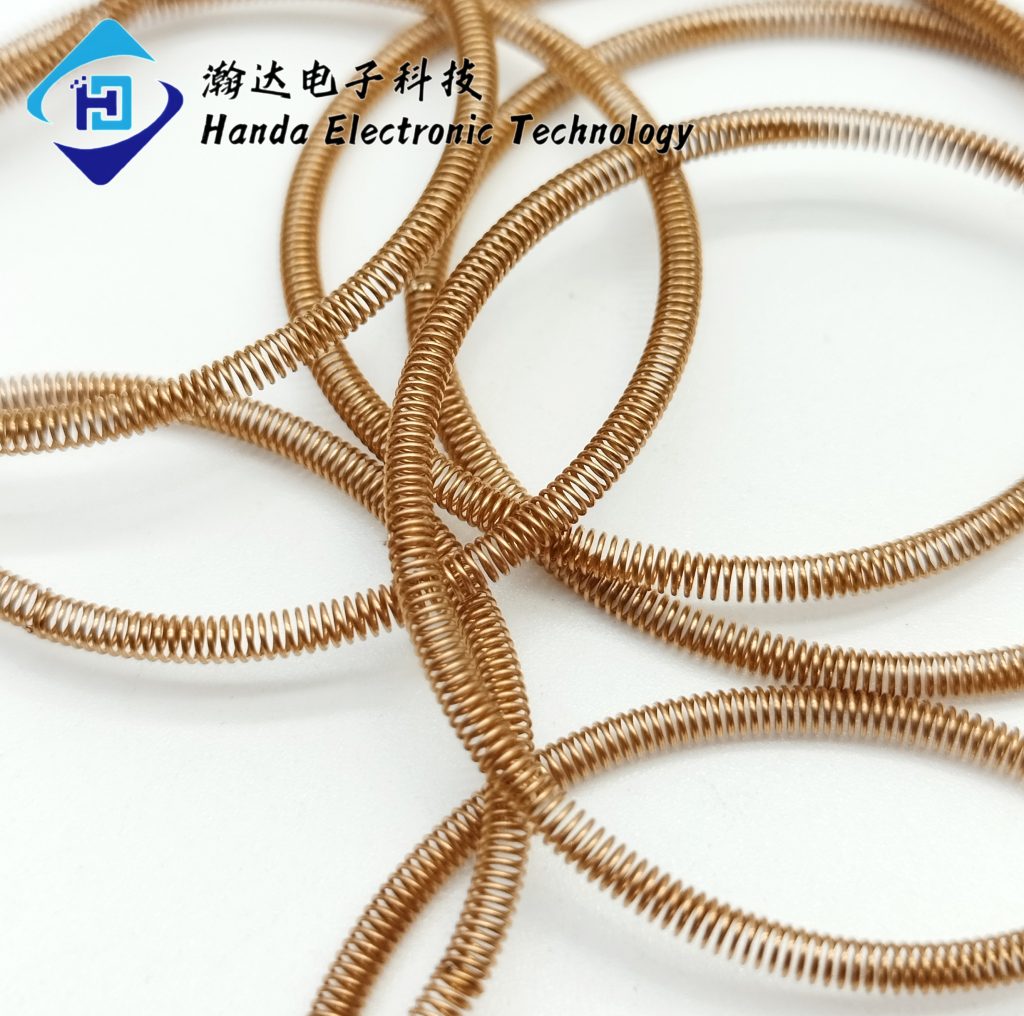
In vacuum equipment, the biggest challenge is not achieving initial sealing performance, but maintaining sealing reliability during long-term operation.
Even a very small gap can affect vacuum performance.
During continuous operation, vacuum sealing systems may experience:
Therefore, vacuum sealing systems require a spring element that can continuously compensate for these changes.If you need to contact us, you may be eligible to receive a free sample.
Common Challenges in Vacuum Sealing Systems
| Challenge | Main Cause | Impact on Sealing Performance |
|---|---|---|
| Seal compression change | Long-term compression | Reduced contact pressure |
| Dimensional variation | Temperature fluctuation | Changes in sealing gap |
| Material fatigue | Long operating cycles | Reduced recovery capability |
| Manufacturing tolerance | Assembly variation | Increased leakage risk |
Canted Coil Springs Compared with Traditional Sealing Structures
Test Conditions:
| Performance Item | Traditional Sealing Structure | Spring Energized Seal with Canted Coil Spring |
|---|---|---|
| Initial sealing performance | Good | Excellent |
| Long-term load retention | May decrease over time | More stable |
| Compensation capability | Limited | Improved |
| Long-term reliability | Moderate | Higher |
For vacuum equipment such as: For applications requiring reliable vacuum sealing performance, engineers should consider:
Our engineering team can help select suitable Canted Coil Spring solutions according to specific application requirements.Contact our sealing engineers for technical support.
Cryogenic environments create significant challenges for sealing systems.
Typical cryogenic applications include: Operating temperatures may reach:
At these temperatures, both sealing materials and metal components experience physical changes that can affect sealing performance.
When temperature decreases, metal components contract and sealing materials may experience:
These changes can reduce the contact pressure between the seal and the mating surface.
Test Conditions:
| Performance Item | 25°C Environment | -196°C Cryogenic Environment |
|---|---|---|
| Seal material condition | Flexible | Reduced flexibility |
| Metal component dimensions | Stable | Thermal contraction occurs |
| Sealing contact pressure | Stable | May decrease |
| Compensation requirement | Low | High |
In cryogenic applications, Canted Coil Springs provide continuous elastic recovery force to compensate for dimensional changes caused by temperature reduction.Compared with sealing structures that rely only on material elasticity, Spring Energized Seals with Canted Coil Springs can maintain more stable contact pressure in extreme low-temperature environments.
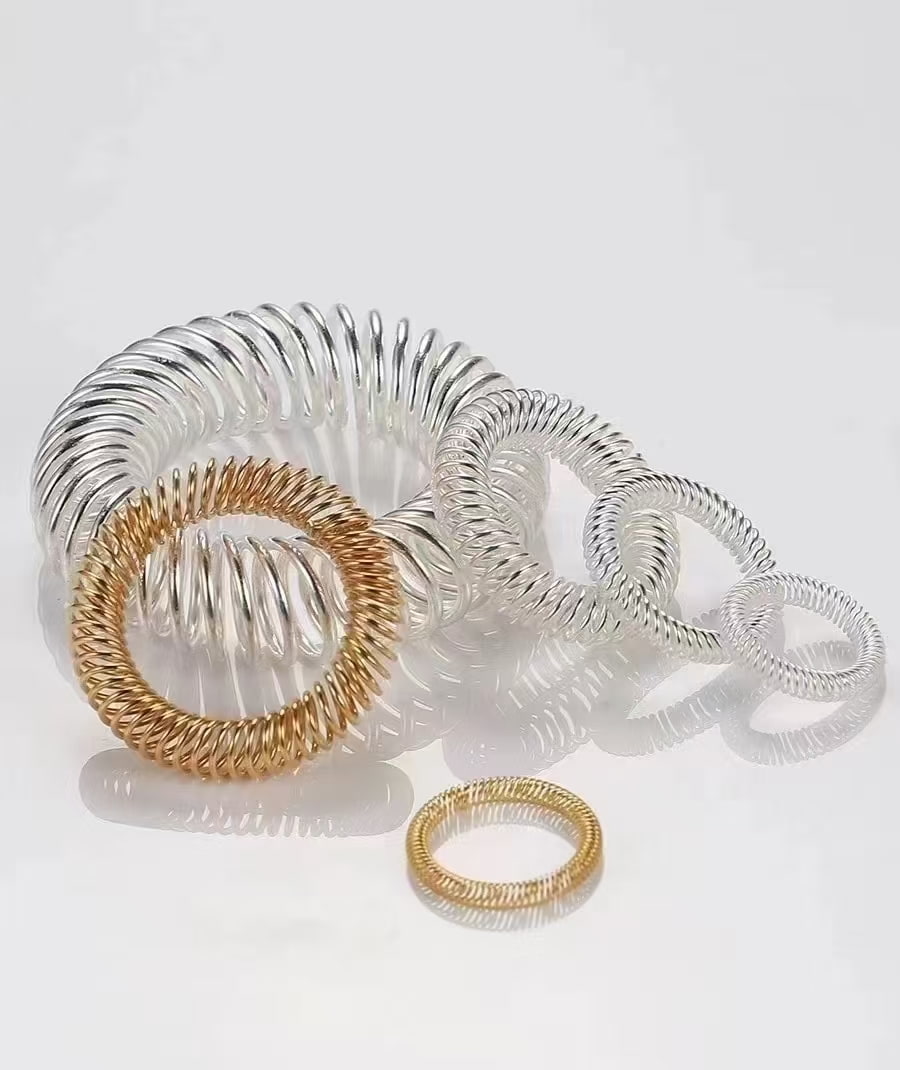
Selecting the correct material is one of the most important steps when designing a Spring Energized Seal for vacuum and cryogenic applications.
The Canted Coil Spring must ensure stable performance in all conditions: Different materials provide different levels of:
Therefore, engineers should select the spring material according to the actual operating environment instead of choosing only based on cost.
| Material | Main Advantages | Temperature Capability | Typical Applications |
|---|---|---|---|
| 316 Stainless Steel | Good corrosion resistance, cost-effective, widely available | General temperature applications | Industrial vacuum equipment, general sealing systems |
| Elgiloy | Excellent fatigue resistance and long-term elasticity | Medium to high temperature range | High-cycle sealing applications |
| Hastelloy C276 | Outstanding corrosion resistance | Harsh chemical environments | Chemical processing and special sealing systems |
316 Stainless Steel is one of the most commonly used materials for Canted Coil Springs.
Its advantages include: Typical applications include:
Compared with standard stainless steel materials, Elgiloy provides: Typical applications:
When sealing systems operate in corrosive environments, material compatibility becomes critical.Hastelloy C276 provides excellent resistance against many aggressive chemical conditions.Typical applications include:
Material Selection Comparison Under Different Operating Conditions
| Operating Condition | Recommended Material | Reason |
|---|---|---|
| Room temperature vacuum equipment | 316 Stainless Steel | Reliable performance and cost efficiency |
| Long cycle operation | Elgiloy | Better fatigue resistance |
| Corrosive chemical environment | Hastelloy C276 | Excellent corrosion resistance |
Canted Coil Springs are commonly used in equipment where sealing failure can lead to performance loss or system downtime.Typical applications include:
| Application | Main Requirement |
|---|---|
| Vacuum chambers | Low leakage and long-term stability |
| Cryogenic pumps | Reliable sealing at extremely low temperatures |
| Semiconductor equipment | Clean and stable sealing performance |
| Aerospace systems | High reliability under demanding conditions |
| Scientific instruments | Precision sealing performance |
Get a free consultation with an engineer—I’m always available.
electing the right Canted Coil Spring requires more than choosing a spring size or material. For vacuum and cryogenic sealing applications, engineers need to evaluate the actual operating conditions of the sealing system.Before selecting a spring, the following parameters should be confirmed:
| Selection Parameter | What Engineers Need to Confirm | Why It Matters |
|---|---|---|
| Operating temperature | Minimum and maximum working temperature | Determines material performance and spring reliability |
| Pressure condition | Vacuum level or system pressure | Influences required sealing force |
| Seal type | Static or dynamic sealing | Determines spring load requirements |
| Media compatibility | Gas, liquid, chemicals, or special environments | Determines suitable spring material |
| Groove dimensions | ID, OD, groove width, and depth | Ensures proper installation and compression |
| Service life requirement | Operating hours and cycle frequency | Determines fatigue performance requirements |
| Installation space | Available radial and axial space | Defines spring dimensions |
For cryogenic applications, the minimum operating temperature is one of the most important factors.For example, if a sealing system operates from 25°C down to -196°C, engineers cannot evaluate spring performance only at room temperature. The material, spring load, and sealing structure must be verified across the entire temperature range.
In vacuum and cryogenic sealing applications, standard Canted Coil Springs may not always meet specific equipment requirements.Factors such as:
HANDA provides customized Canted Coil Spring solutions for Spring Energized Seal applications, helping engineers select suitable spring materials, dimensions, and load characteristics according to actual working conditions.For more information about Canted Coil Springs and customized spring solutions, visit:HANDA Custom Spring Manufacturing Solutions.
