


Explore the mechanics of spring coils, including canted coil springs, and the differences between torsion bars and coil springs, to better appreciate their engineering value. As a professional spring manufacturer, HANDA has long specialized in high-performance spring solutions used across automotive, electronics, medical, and industrial applications.
Understanding the Mechanics of Spring Coils
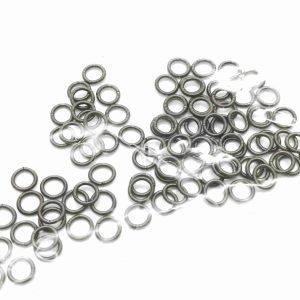
Spring coils are everywhere—from vehicle suspension systems to precision connectors inside electronic devices. Understanding how these components work helps engineers and designers make better decisions when selecting spring solutions. Companies like HANDA, with years of experience in spring engineering, focus on optimizing force, durability, and reliability for real-world applications.
What Are Spring Coils?
At their core, spring coils are mechanical devices that store and release energy. They are typically made from flexible materials such as stainless steel, carbon steel, or copper alloys, allowing them to deform under load and return to their original shape once the force is removed.
This elastic behavior makes spring coils essential for:
Manufacturers such as HANDA design spring coils to meet strict mechanical and environmental requirements, ensuring consistent performance over long service lives.
Types of Spring Coils
Different applications require different spring designs. Common types include:
Each spring type must be carefully designed and manufactured to ensure proper force and fatigue resistance—an area where experienced manufacturers like HANDA add significant value.
Canted Coil Springs
Canted coil springs, also known as slant coil springs, are a specialized spring design with coils angled relative to the spring axis. This geometry allows them to deliver near-constant force over a wide deflection range, making them highly suitable for precision applications.
Benefits of Canted Coil Springs
Canted coil springs offer several unique advantages:
Because of these characteristics, HANDA canted coil springs are widely used in automotive connectors, medical devices, aerospace components, and electronic shielding applications, where consistency and reliability are critical.
Torsion Bar vs. Coil Spring
In vehicle suspension systems, torsion bars and coil springs are commonly compared. Each has its own strengths depending on design goals and operating conditions.
Torsion Bars
A torsion bar functions as a spring by twisting along its length. These are often used in trucks and SUVs.
Advantages of torsion bars:
Coil Springs
Coil springs compress and expand to absorb energy and are widely used in passenger vehicles.
Advantages of coil springs:
Selecting the right solution depends on performance requirements—an evaluation often supported by experienced engineering teams such as those at HANDA.
The Mechanics of Spring Coils
Spring coil behavior is governed by Hooke’s Law, which states that the force applied to a spring is proportional to its displacement, provided the elastic limit is not exceeded.
Hooke’s Law Formula:
F = k × x
Where:
Accurate calculation of these values is essential for reliable spring performance. At HANDA, spring constants and force curves are precisely engineered and verified through testing to ensure predictable results in real applications.
Applications of Spring Coils
Spring coils are essential across many industries, including:
As a specialized spring manufacturer, HANDA provides both standard and custom spring solutions tailored to these demanding applications.
Conclusion
Spring coils are true engineering essentials, supporting countless mechanical and electrical systems. From the precision of canted coil springs to the robust performance of torsion bars and coil springs, these components play a vital role in modern technology.
By understanding spring mechanics and selecting a reliable manufacturer like HANDA, engineers and designers can achieve higher performance, longer service life, and greater system reliability. Whether for automotive, medical, or industrial use, expertly engineered spring solutions remain a foundation of innovation and mechanical excellence.
Why Choose HANDA Springs
Choosing the right spring manufacturer is essential for ensuring product performance, reliability, and long-term value. HANDA Springs is a trusted supplier of precision spring solutions, offering deep technical expertise and consistent manufacturing quality for demanding applications.
Proven Expertise in Spring Engineering
HANDA specializes in the design and production of canted coil springs, compression springs, and custom spring solutions. With extensive experience serving automotive, electronics, medical, and industrial markets, HANDA understands how spring mechanics, material selection, and force characteristics impact real-world performance.
Custom Design and Application Support
Every application has unique requirements. HANDA provides custom spring engineering services, working closely with customers to optimize spring geometry, force range, and materials. From initial design consultation to prototyping and validation, HANDA supports projects at every development stage.
Advanced Manufacturing and Quality Control
HANDA utilizes modern precision manufacturing equipment and controlled production processes to ensure dimensional accuracy and repeatability. Comprehensive quality control, including force testing and dimensional inspection, ensures each spring meets specified performance standards before delivery.
Material Versatility for Demanding Environments
To meet diverse application needs, HANDA offers a wide range of material options, including stainless steel, copper alloys, and specialty materials. These options allow springs to perform reliably under vibration, temperature variation, and corrosive conditions.
Reliable Partner for Long-Term Success
Beyond manufacturing, HANDA focuses on building long-term partnerships by delivering consistent quality, responsive technical support, and dependable lead times. Whether for high-volume production or specialized custom applications, HANDA Springs provides solutions engineers can trust.
