


In high-reliability sealing and precision mechanical systems, the Detached Leg Spring is an elastic component with a relatively unique structure but high engineering value. Unlike traditional continuous ring springs, which maintain a complete closed loop, it utilises a ‘detached leg structure’ to enable localised force distribution and independent deformation control.In other words, it functions more like a set of ‘independently operating elastic units’ than a closed-loop structure that bears force as a whole.
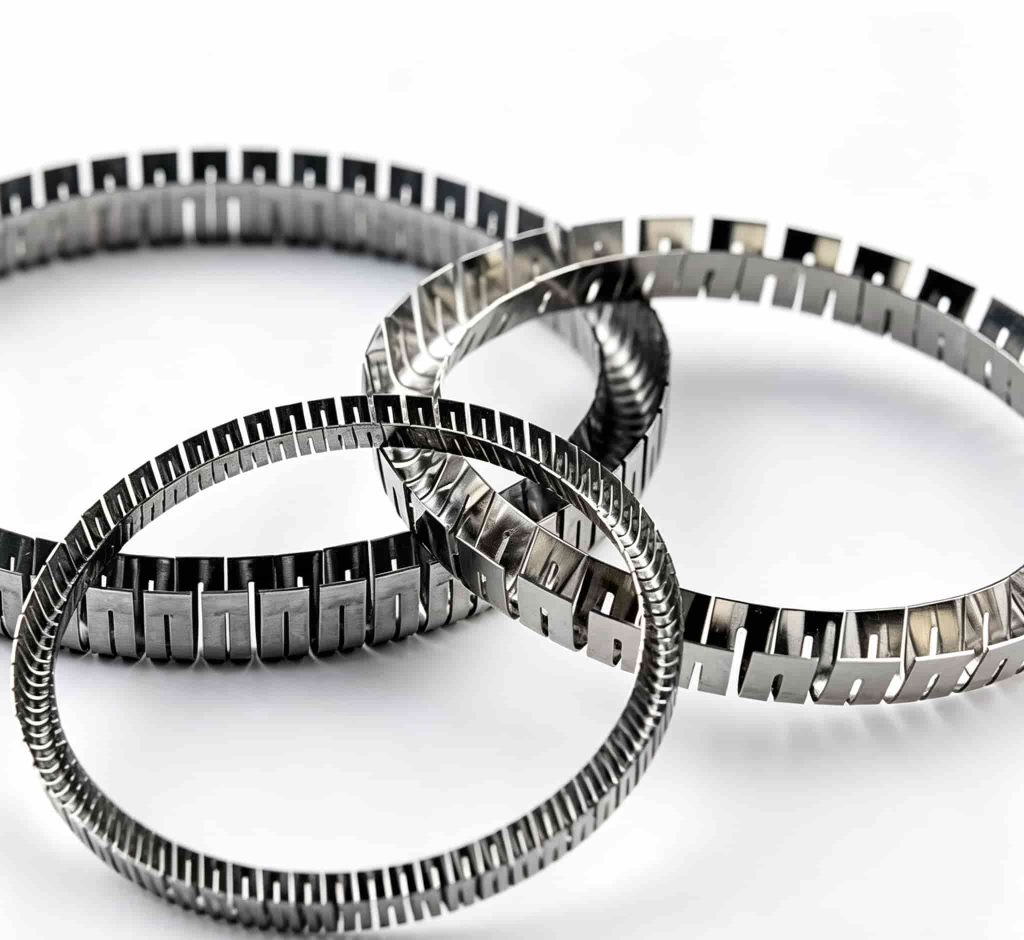
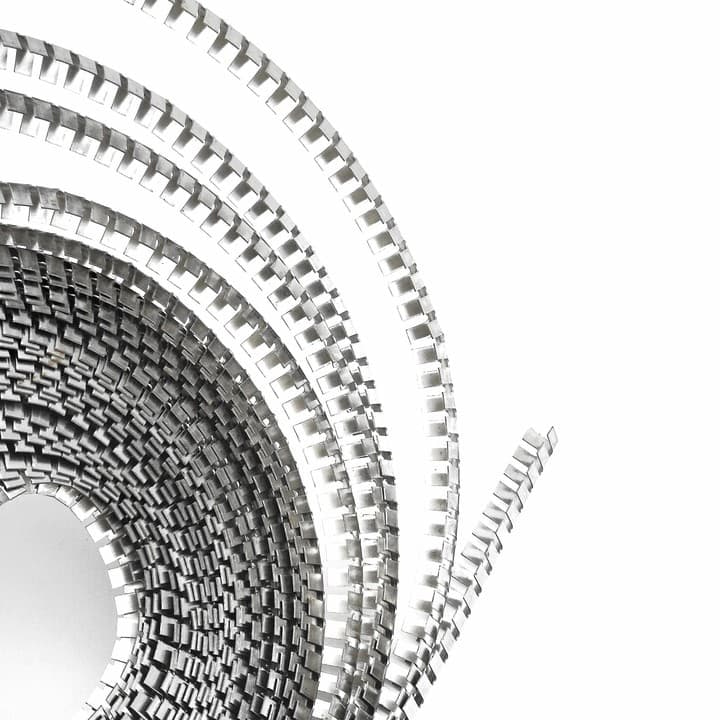
A Detached Leg Spring can be simply understood as a spring with several “legs” that can adjust themselves independently, rather than a fully integrated structure that deforms as one piece like a traditional spring.Its main structural features can be explained as follows:
Unlike a conventional spring where everything is fully connected and deforms together, the legs in a Detached Leg Spring are partially independent.
This means the legs do not strictly follow the overall deformation of the spring body and have some freedom to move on their own.
Because the legs are flexible, they can automatically adjust their angle and position during compression to better fit the contact surface instead of forcing a rigid fit.
If there are small dimensional errors or uneven surfaces in the assembly, the spring will not jam or lose contact easily. Instead, the legs adjust slightly to compensate for these variations.
The load is not concentrated at a single point but spread across multiple legs and the spring body, making the structure more stable and resistant to fatigue.
The advantages of a Detached Leg Spring can be summed up in one sentence: easier to assemble, better contact, and more durable.More specifically:
Because the legs can self-adjust, the spring does not require extremely precise installation.
Even if there are small alignment errors, it can adapt itself without jamming or assembly issues.
The legs automatically conform to the contact surface. Whether the surface is flat or slightly uneven, it maintains a more uniform contact force and avoids situations where one side is tight and the other is loose.
The force is not concentrated at a single point but distributed across multiple legs and the spring body. This reduces fatigue and lowers the risk of long-term failure.
When dealing with irregular surfaces, housing deformation, or thermal expansion, it can compensate through slight leg adjustments and maintain reliable performance.
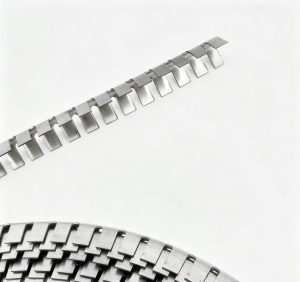
The core use case of a Detached Leg Spring can be summarized as:any situation that requires reliable contact while facing tolerances, vibration, or structural deformation.
Below is a clearer breakdown by engineering scenarios:
| Type | Structural Characteristics | Advantages | Disadvantages | Typical Applications | Comparison with Detached Leg Spring |
|---|---|---|---|---|---|
| Detached Leg Spring | Multi-leg segmented structure, each leg can deform independently, offering high local compliance | Excellent tolerance accommodation, stable contact, high EMI shielding consistency, strong deformation adaptability | Higher design complexity, higher manufacturing cost | High-reliability EMI shielding, precision connections, aerospace and high-end electronic systems | Baseline solution: combines high flexibility and stable contact performance, adaptable to complex gaps |
| Cantilever V Spring | V-shaped open structure providing force through angular deformation | Simple structure, low cost, clearly defined preload force | Single contact path, sensitive to assembly accuracy, limited local adaptability | Simple preload structures, basic electrical contact applications | More economical, but significantly weaker in adaptability and stability compared to Detached Leg Spring |
| Cantilever U Spring | U-shaped bent structure generating force through overall elastic bending | Stable structure, easy manufacturing, clear load path | Limited elastic travel, moderate local compensation capability | Standard clamping structures, general mechanical contact applications | More stable than V-type, but still lacks flexibility and complex gap adaptation |
| Full Contact Springs | Multi-point or surface contact design aiming for continuous contact interface | Large contact area, stable electrical conductivity, strong vibration resistance | Complex structure, high manufacturing consistency requirements, higher cost | High-reliability conductive connections, critical EMC shielding interfaces | Similar in contact area to Detached Leg Spring, but typically lacks independent leg-based local compliance |
Below, we’ll use a more intuitive ‘real-life scenario’ to illustrate when to choose a Detached Leg Spring:
1.The equipment is subject to constant vibration, but must not come loose:Vehicle ECUs,Industrial compressor control cabinets,Rail transport equipment.
Suitable operating conditions: The equipment is subject to constant vibration, and standard spring plates tend to develop poor contact over time.
2. The sealing structure is subject to thermal expansion and contraction:Outdoor electronic enclosures,Aerospace equipment,Outdoor communication enclosures.
Due to the significant temperature difference between day and night, the materials will repeatedly expand and contract.
3.Equipment that requires frequent disassembly and maintenance:Plug-in modular equipment,Test instruments,Serviceable communication modules.
The equipment must be repeatedly dismantled and reassembled, but its performance must remain consistent each time it is reassembled.
4.The enclosure door does not close properly, but effective shielding must still be ensured:Communications equipment cabinet doors,Radar control boxes,5G base station enclosures.
Doors do not fit together perfectly; there is always a slight gap or a slight difference in height, and they are opened and closed frequently.
If you have any queries regarding our recommendations, please do not hesitate to contact us; we will do our utmost to answer your questions and assist you.
From an engineering perspective, segmented springs are essentially tools designed to solve specific structural problems, rather than substitutes for traditional coil springs. By dividing the load-bearing unit into segments, each segment can adapt more flexibly to complex spaces and irregular contact surfaces, thereby enhancing local adaptability. However, this segmented structure also means they are more sensitive to design and assembly precision; if designed improperly, this may lead to uneven load distribution or reduced stability. Therefore, the key to selection lies not in whether the design is “advanced,” but in whether it is “suitable for the operating conditions.”
In short: For simple structures where long-term stability and reliability are the primary considerations, helical springs should be the first choice; whereas in situations with complex spatial constraints that require local adaptability, a segmented design may be considered. Please contact us for further assistance with selection or customization.
